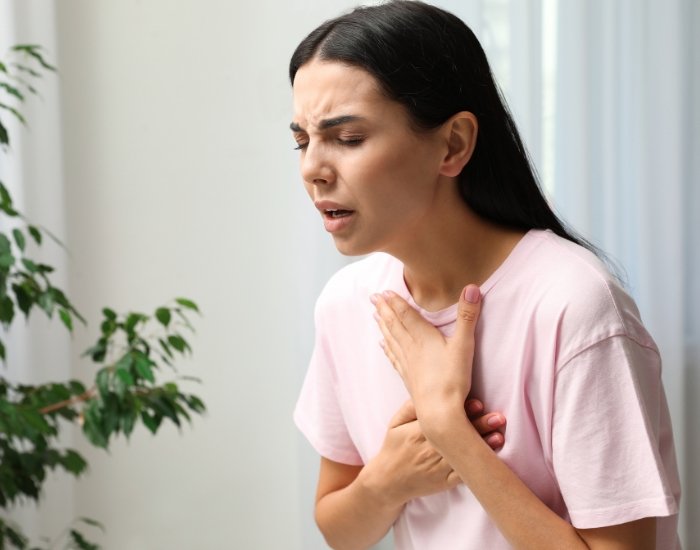
Jaw pain on its own usually points to a dental problem, grinding or the jaw joint. But jaw pain that comes with chest discomfort, breathlessness, sweating or nausea, or jaw pain that appears with exertion, is a well-known warning sign of heart trouble.
The reason is anatomy: nerves from the heart and from the jaw and neck feed into the same areas of the spinal cord, so the brain can misread heart pain as coming from the jaw. This guide explains when the combination is dangerous, how to tell it from other causes and what to do.
Quick answer
Chest pain together with jaw pain can be a sign of angina or a heart attack, because pain from an oxygen-starved heart is often referred to the jaw, neck, shoulder or arm. It is especially concerning if the pain is pressure-like, comes on with exertion or at rest, lasts more than a few minutes, or comes with shortness of breath, cold sweat, nausea or lightheadedness. Jaw pain alone with exertion can also be angina. Call 911 for chest and jaw pain together that lasts more than a few minutes.
Have symptoms you want checked? Dr. M. Usman Khan sees patients at our Northwest Houston, Tomball and Sugar Land offices.
What patients say about our care team
Read all reviews on Google- ★★★★★
The staff was amazing, very friendly and attentive.
— Stephanie G. Google review - ★★★★★
He explained everything to me!
— Yesenia B. Google review - ★★★★★
Everyone is incredibly supportive and the standard of care is top tier.
— Humzah A. Google review - ★★★★★
It's always good when someone cares, not just comes to work.
— Cecila A. Google review - ★★★★★
I felt like I waited less time and was seen much faster!
— Yesenia B. Google review
- ★★★★★
I am extremely grateful for the support and compassion.
— Debra L. W. Google review - ★★★★★
She always takes great care of me.
— Shemeanna B. Google review - ★★★★★
Her clinical skills were exemplary. I would definitely recommend.
— Humzah A. Google review - ★★★★★
I had a great experience with my appointment today.
— Stephanie G. Google review - ★★★★★
Mrs. Maxine literally listened to my concerns.
— Cecila A. Google review
Important
Chest and jaw pain together, especially with sweating, nausea or breathlessness, needs 911 now.
Why Does Heart Pain Spread to the Jaw?
Heart pain signals travel through the same spinal nerve segments that carry sensation from the jaw, neck, shoulders and arms, so the brain may perceive it in those areas (referred pain).
Referred jaw pain from the heart is often felt on the left side or both sides of the lower jaw, may feel like a dull ache or pressure, and is not tied to chewing.
How Does Jaw Pain Appear During a Heart Attack?
It usually comes with chest pressure, but can be the main symptom, especially in women; associated breathlessness, sweating, nausea or fatigue make a heart cause more likely.
See pre-heart attack warning signs and heart disease warning signs in women.
When to seek care right away
Call 911 for:
- Chest and jaw pain together lasting minutes
- Jaw pain with sweating, nausea or breathlessness
- Jaw pain with lightheadedness or fainting
- Chest pain at rest
Call your doctor the same day for:
- Jaw or throat tightness with exertion
- Recurrent unexplained jaw pain with risk factors
- Jaw discomfort in cold weather when walking
- Normal dental exam but persistent jaw pain
Can Jaw Pain Be Angina?
Yes. Jaw or throat tightness that comes on with walking, climbing stairs or cold air and fades with rest is a classic angina pattern, even without chest pain.
This deserves a prompt cardiology evaluation and often a stress test. See symptoms of blocked heart arteries.
How Do Heart-Related and Dental or TMJ Jaw Pain Differ?
Heart-related jaw pain is often dull pressure, triggered by exertion or occurring at rest with other symptoms; dental or TMJ pain is usually localized, worse with chewing, pressing or opening the mouth, and may come with tooth sensitivity or clicking.
| Feature | Heart-related | Dental or TMJ |
|---|---|---|
| Feeling | Dull pressure, ache | Sharp, throbbing or localized ache |
| Trigger | Exertion, stress, at rest | Chewing, biting, cold or hot foods |
| Side | Left or both sides | Usually one tooth or joint |
| Other symptoms | Chest pressure, breathlessness, sweating | Tooth sensitivity, clicking, swelling |
| Relief | Rest (angina) | Dental treatment, rest of jaw |
What Else Causes Chest and Jaw Pain Together?
Acid reflux, esophageal spasm, anxiety, neck arthritis and, rarely, aortic dissection can cause discomfort in both areas.
Because the overlap with heart pain is large, clinicians usually rule out the heart first.
What Should You Do?
Stop activity and sit down, call 911 if pain lasts more than a few minutes or comes with other symptoms, chew aspirin only if the dispatcher advises and you are not allergic, and do not drive yourself.
If symptoms come only with exertion and fully resolve, arrange a prompt cardiology visit rather than waiting. See what to do about chest pain.
How Is It Evaluated?
An ECG and troponin test in the emergency setting; for exertional symptoms, a stress test, coronary CT angiography or calcium score.
See stress echocardiogram and nuclear stress test.
Who Is Most Likely to Have Heart-Related Jaw Pain?
People with coronary artery disease risk factors such as age over 50, smoking, diabetes, high blood pressure, high cholesterol, kidney disease, obesity and a family history of early heart disease, and women, who more often have atypical symptoms.
People with diabetes may have reduced pain sensation and present with mild jaw or arm discomfort, breathlessness or fatigue rather than strong chest pain. If you have several risk factors, unexplained jaw discomfort, especially with activity, should be evaluated by a clinician rather than only a dentist.
A dentist and cardiologist working together
Dentists sometimes spot the first sign of heart disease when a patient describes jaw pain with exertion and the teeth and joint look normal. If your dental exam is unremarkable but jaw discomfort persists or appears with exertion, ask for a heart check.
Where Else Can Heart Pain Be Felt?
Besides the jaw, heart pain can be felt in the left or both arms, shoulders, neck, throat, between the shoulder blades and in the upper abdomen.
- Arm: heaviness, aching or numbness, often the left arm but sometimes both.
- Shoulder: dull ache not related to movement.
- Neck and throat: tightness or choking sensation.
- Upper back: pressure between the shoulder blades, common in women.
- Upper abdomen: pressure or indigestion-like discomfort.
See chest pain radiating to the arm and back.
After the emergency is ruled out
If tests in the emergency department are normal, follow up with a cardiologist, particularly if the jaw or chest discomfort was triggered by exertion. A negative troponin rules out a heart attack at that moment but does not exclude stable angina, which needs its own evaluation.
How Can You Lower Your Risk?
Control blood pressure, cholesterol and diabetes, stop smoking, stay active, eat a Mediterranean or DASH diet, keep a healthy weight and take prescribed heart medicines consistently.
If you have already had angina or a heart attack, carry nitroglycerin if prescribed, know your personal warning signs, and attend cardiac rehabilitation. Teach family members the warning signs too, since they may recognize a pattern before you do. See lifestyle changes for heart disease.
Does the Timing of Jaw Pain Matter?
Yes. Jaw pain that comes on with exertion, emotional stress, cold air or after a heavy meal and fades with rest points toward angina, whereas pain that occurs with chewing or on waking after grinding points toward dental or jaw joint causes.
Why Do People Delay Care for Jaw Pain?
Many people assume jaw pain is dental, sinus-related or from stress and wait to see if it passes; with a heart attack, that delay means losing heart muscle that could have been saved.
Treat new jaw pain with chest or breathing symptoms as an emergency, and get exertional jaw pain checked within days rather than weeks.
Can Chest and Jaw Pain Signal Aortic Dissection?
Rarely. Aortic dissection causes sudden, severe, tearing pain in the chest or back that can spread to the neck or jaw and is a life-threatening emergency.
When in Doubt, Who Should You Call?
Call 911 for possible heart attack symptoms; call your cardiologist or primary care office for exertional jaw discomfort that has fully resolved.
Where to See a Cardiologist in Houston
Epic Heart & Vascular Center evaluates heart and vascular symptoms at three Greater Houston offices, with many tests such as ECGs and echocardiograms available on site. Care is led by Dr. M. Usman Khan, MD, FACC.
Also serving Richmond, Spring, Kingwood, Willowbrook and Eldridge patients. Monday to Friday, 8:00 am to 5:00 pm.
Key Takeaways
- Heart pain can be referred to the jaw through shared nerve pathways.
- Chest and jaw pain together is a classic heart attack warning sign.
- Jaw tightness with exertion can be angina even without chest pain.
- Dental and TMJ pain are usually tied to chewing and localized.
- Call 911 for chest and jaw pain lasting more than a few minutes.
Frequently Asked Questions
Can jaw pain be a sign of a heart attack?
Yes, especially with chest pressure, breathlessness, sweating or nausea.
Which side of the jaw hurts in a heart attack?
Often the left side or both sides of the lower jaw.
Is jaw pain alone ever the heart?
Yes. Some people, especially women, feel angina mainly in the jaw or throat.
How do I know if jaw pain is dental?
Dental pain is usually localized and worse with chewing, hot or cold foods.
Can anxiety cause chest and jaw pain?
Yes, through muscle tension, but heart causes should be ruled out first.
What test checks for heart-related jaw pain?
An ECG and troponin in an emergency; a stress test for exertional symptoms.
Sources and Further Reading
- National Heart, Lung, and Blood Institute. Heart Attack.
- Centers for Disease Control and Prevention. About Heart Attack Symptoms, Risk, and Recovery.
- MedlinePlus. Angina.
- MedlinePlus. Temporomandibular disorders.
Medical disclaimer: This article is for general education and does not replace a visit with your own doctor. Symptoms, test results and treatment choices differ from person to person.
Please note: Reading this article does not create a doctor–patient relationship. If you think you are having a medical emergency, call 911.

About our cardiology practice
Dr. M. Usman Khan, MD, FACC
Dr. Khan is an interventional and general cardiologist who leads care at Epic Heart & Vascular Center, with offices in Northwest Houston, Tomball and Sugar Land. He completed his cardiovascular fellowship at the University of Virginia and holds fellowships in the American College of Cardiology, the American College of Physicians, the Society for Cardiovascular Angiography and Interventions and the American Society of Nuclear Cardiology.
This guide was written by the Epic Heart & Vascular Center editorial team from the sources listed above. Meet Dr. Khan →
Related Articles

Chest Pain That Radiates to the Arm and Back: Is It Heart-Related?
Chest pain spreading to the arm or back can signal a heart attack, angina or aortic dissection, but it can also come…

What Are the Symptoms of Blocked Arteries in the Heart?
Blocked coronary arteries can cause chest pressure with exertion, breathlessness, unusual fatigue and pain in the arm, jaw or back, or no…

What Are the Early Warning Signs of Heart Disease in Women?
Heart disease is the leading cause of death in women, yet its early signs are often subtle: fatigue, breathlessness, sleep problems, nausea…