
Heart care
High blood pressure often causes no symptoms, yet it raises the risk of heart attack, stroke, heart failure and kidney disease. We confirm readings, look for contributing causes, review medicines, and set a plan and target that fit you.
Overview
Blood pressure is the force of blood against artery walls, written as two numbers: systolic (when the heart beats) over diastolic (between beats). When it stays high, it strains the heart and damages blood vessels over time. Nearly half of U.S. adults have high blood pressure, and many do not know it.
Because a single office reading can be misleading, the 2025 American Heart Association and American College of Cardiology guideline recommends home monitoring with a validated device to help confirm the diagnosis and track treatment.
Who may benefit
Many people manage blood pressure with their primary care doctor. A cardiologist can help when control is difficult or when heart disease is also present.
Your visit
Home readings
Your care team may give you a specific schedule. Follow their instructions if they differ from these general tips.
Testing
| Test | Why it may be used |
|---|---|
| Blood and urine tests | Kidney function, potassium, blood sugar and cholesterol. The 2025 guideline recommends a urine albumin-to-creatinine test for people with high blood pressure. |
| ECG | Looks for signs of strain on the heart or rhythm problems. |
| Echocardiogram | Checks for thickening of the heart muscle and how well the heart pumps. |
| Renal vascular ultrasound | Sometimes used when narrowing of the kidney arteries is suspected as a cause. |
Treatment
Lower sodium intake, an eating pattern such as DASH, regular physical activity, limiting alcohol, reaching a healthier weight and good sleep all lower blood pressure for many people. They also make medicines work better.
Several classes of blood pressure medicine are available, and many people need more than one. The right choice depends on your other conditions, side effects and how your readings respond. Take medicines as prescribed and talk with your clinician before stopping or changing a dose.
Untreated sleep apnea can make blood pressure hard to control. If it is suspected, we coordinate testing with your primary care doctor or a sleep specialist. Other causes, such as kidney artery narrowing or hormone conditions, are considered when the pattern suggests them.
Visits are usually more frequent while treatment is being adjusted and less frequent once readings are steady.
Your cardiologist
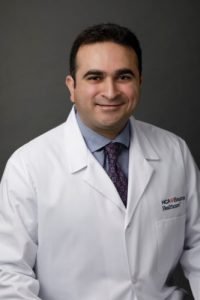
Dr. Khan evaluates difficult-to-control blood pressure and the heart conditions linked to it, and works with your primary care doctor on a shared plan.
Where care happens
Blood pressure visits take place at all three offices.
17070 Red Oak Dr #405
Houston, TX 77090
155 School St Suite 220
Tomball, TX 77375
6534 Greatwood Parkway Unit A
Sugar Land, TX 77479
Also serves Richmond-area patients
Before you come
See new patient information and the insurance plans we work with. Coverage depends on your specific plan, so please confirm with your insurer.
Questions
Some people have higher readings in a medical setting, sometimes called white-coat hypertension. Others have the opposite pattern. Home readings help sort this out, which is why we ask you to bring them.
Current guidelines encourage most adults with high blood pressure to aim below 130/80 mm Hg, but your own target depends on your health, age and how you tolerate treatment. Your clinician will set it with you.
Normal readings on medicine usually mean the medicine is working. Talk with your clinician before making any change.
Sources
Prepared by the Epic Heart & Vascular Center editorial team. Clinical review by a practice physician is pending for this version. Last updated November 2026.
Next step
Submitting the form sends a request. Our team will call you to confirm a time, the office and your insurance.
Care is led by Dr. M. Usman Khan, MD, FACC, an interventional and general cardiologist. New patients can review patient information and the insurance plans we accept.
Heart & Vascular Care Close to Home
Book a visit with our board-certified cardiologist at any of our three offices. Our team will call you to confirm your time and insurance.
Houston (NW / Red Oak)
17070 Red Oak Dr #405, Houston, TX 77090
832-432-1951
Tomball
155 School St Ste 220, Tomball, TX 77375
832-304-2070
Sugar Land (Greatwood)
6534 Greatwood Pkwy Unit A, Sugar Land, TX 77479
832-645-8992
For a medical emergency, call 911.
Schedule an Appointment
Fill out the form and our team will contact you to confirm your visit.
Call the office nearest you
Houston NW / Red Oak · 832-432-195117070 Red Oak Dr #405, Houston, TX 77090 Tomball · 832-304-2070155 School St Ste 220, Tomball, TX 77375 Sugar Land / Greatwood · 832-645-89926534 Greatwood Pkwy Unit A, Sugar Land, TX 77479For a medical emergency, call 911.