When people hear heart failure, they often imagine a weak heart that cannot pump. But about half of people with heart failure have a heart that squeezes normally. Their problem is filling: the muscle is stiff and does not relax well, so pressure builds up behind it and fluid backs into the lungs. This is diastolic heart failure, now called heart failure with preserved ejection fraction (HFpEF).
HFpEF is especially common in older adults, women and people with high blood pressure, obesity, diabetes and atrial fibrillation. For years there were few proven treatments, but that has changed. This guide explains what HFpEF is, how it is diagnosed and how it is treated today.
Quick answer
Diastolic heart failure (heart failure with preserved ejection fraction, HFpEF) occurs when the heart muscle is stiff and cannot relax and fill properly, even though its pumping strength (ejection fraction 50% or more) is normal. It causes breathlessness on exertion, fatigue, swelling and reduced exercise tolerance. Main causes are long-standing high blood pressure, obesity, diabetes, aging, kidney disease and atrial fibrillation. Diagnosis uses an echocardiogram, BNP blood tests and sometimes exercise testing. Treatment includes SGLT2 inhibitors, diuretics for fluid, controlling blood pressure and AFib, weight loss, exercise training and treating sleep apnea.
Have symptoms you want checked? Dr. M. Usman Khan sees patients at our Northwest Houston, Tomball and Sugar Land offices.
What patients say about our care team
Read all reviews on Google- ★★★★★
The staff was amazing, very friendly and attentive.
— Stephanie G. Google review - ★★★★★
He explained everything to me!
— Yesenia B. Google review - ★★★★★
Everyone is incredibly supportive and the standard of care is top tier.
— Humzah A. Google review - ★★★★★
It's always good when someone cares, not just comes to work.
— Cecila A. Google review - ★★★★★
I felt like I waited less time and was seen much faster!
— Yesenia B. Google review
- ★★★★★
I am extremely grateful for the support and compassion.
— Debra L. W. Google review - ★★★★★
She always takes great care of me.
— Shemeanna B. Google review - ★★★★★
Her clinical skills were exemplary. I would definitely recommend.
— Humzah A. Google review - ★★★★★
I had a great experience with my appointment today.
— Stephanie G. Google review - ★★★★★
Mrs. Maxine literally listened to my concerns.
— Cecila A. Google review
Important
Severe breathlessness at rest, chest pain, fainting or coughing pink frothy sputum needs 911.
What Is Diastolic Heart Failure?
It is heart failure caused by impaired filling: the left ventricle is stiff, so pressures rise during filling and back up into the lungs, even though the ejection fraction is normal.
Diastole is the relaxation phase of each heartbeat. When relaxation is impaired, the heart needs higher pressure to fill, especially during exercise when heart rate rises. See how the heart works.
What Causes HFpEF?
Long-standing high blood pressure, obesity, diabetes, aging, kidney disease, atrial fibrillation, sleep apnea and, less often, infiltrative diseases such as cardiac amyloidosis.
| Cause | How it contributes |
|---|---|
| High blood pressure | Thickens and stiffens the heart muscle |
| Obesity | Inflammation, volume overload, stiffness |
| Diabetes | Metabolic changes in the heart muscle |
| Atrial fibrillation | Loss of the atrial kick and irregular filling |
| Aging | Natural stiffening of heart and arteries |
| Cardiac amyloidosis | Protein deposits stiffen the heart |
See how high blood pressure affects the heart.
What Are the Symptoms?
Shortness of breath with activity, fatigue, reduced exercise tolerance, swelling of the ankles or legs, breathlessness lying flat and rapid weight gain from fluid.
Symptoms often appear first with exertion, when the stiff heart cannot fill fast enough. See early signs of heart failure.
How Is HFpEF Diagnosed?
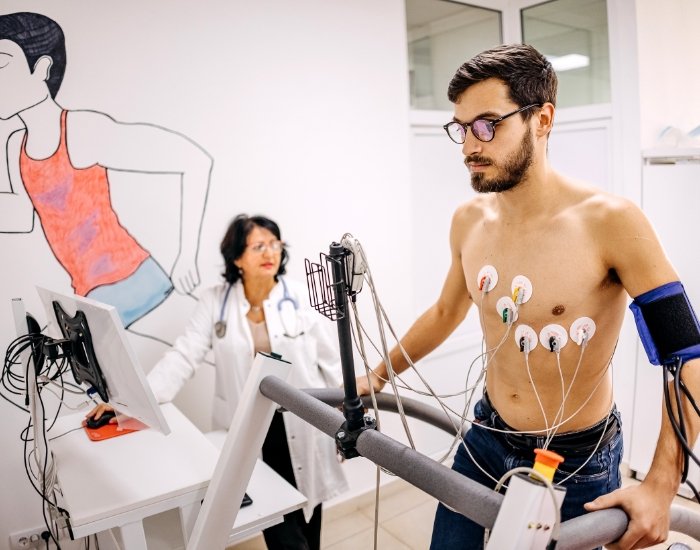
An echocardiogram shows normal ejection fraction with signs of stiffness and high filling pressure; elevated BNP or NT-proBNP supports the diagnosis; exercise testing or catheterization may be used in unclear cases.
- Echocardiogram with Doppler measures of filling.
- BNP or NT-proBNP blood test.
- ECG for AFib and thickening.
- Tests for amyloidosis when suspected (such as a nuclear PYP scan).
- Exercise stress echo or right heart catheterization in selected patients.
How Is Diastolic Heart Failure Treated?
SGLT2 inhibitors reduce hospitalizations; diuretics relieve fluid; controlling blood pressure, AFib, diabetes and weight is central; MRAs or ARNIs may be considered in selected patients.
| Treatment | Purpose |
|---|---|
| SGLT2 inhibitor (empagliflozin, dapagliflozin) | Reduces hospitalization and cardiovascular death |
| Diuretics | Relieve fluid congestion |
| Blood pressure control | Reduce stiffness and strain |
| AFib rate or rhythm control | Improve filling |
| Weight-loss therapy for obesity | Improves symptoms and function |
| Exercise training | Improves exercise capacity |
When to seek care right away
Call 911 for:
- Severe breathlessness at rest
- Chest pain
- Fainting
- Coughing pink frothy sputum
Call your doctor the same day for:
- Weight gain of 2–3 lb in a day or 5 lb in a week
- Worsening ankle swelling
- Needing more pillows to sleep
- New palpitations or AFib
What Lifestyle Changes Help?
Regular exercise or cardiac rehab, weight loss, moderate sodium intake, limiting alcohol, treating sleep apnea and daily weight monitoring.
Weight loss can substantially improve symptoms in obesity-related HFpEF. See cardiac rehabilitation.
What Is the Outlook?
HFpEF is a chronic condition with a risk of hospitalization, but treating causes and comorbidities, newer medicines and an active lifestyle improve symptoms and quality of life.
Regular follow-up allows early adjustment of diuretics and medicines before a hospital stay is needed.
When Should Cardiac Amyloidosis Be Considered?
Transthyretin cardiac amyloidosis is an underdiagnosed cause of HFpEF in older adults, suggested by unexplained heart wall thickening, carpal tunnel syndrome, spinal stenosis, low-voltage ECG or intolerance of blood pressure medicines.
A nuclear pyrophosphate (PYP) scan and blood and urine tests can often diagnose it without a biopsy. Diagnosis matters because effective medicines now exist that slow the disease. If you have HFpEF with thick heart walls, ask whether amyloidosis has been considered.
HFpEF and atrial fibrillation
AFib is very common in HFpEF and makes symptoms worse because the stiff heart depends on coordinated atrial contraction to fill. Controlling heart rate, considering rhythm control and anticoagulation for stroke prevention are key. See AFib diagnosis and treatment.
How Can You Monitor HFpEF at Home?
Weigh yourself every morning, track blood pressure and heart rate, note swelling and breathlessness, take medicines consistently and follow a written action plan from your cardiologist.
- Weigh at the same time each morning after using the bathroom.
- Call for a gain of 2–3 pounds in a day or 5 pounds in a week.
- Check ankles and shins for swelling.
- Notice if you need more pillows to breathe at night.
- Keep a list of medicines and doses, including diuretics.
Who is most at risk?
Women, adults over 65, and people with obesity, diabetes, high blood pressure, kidney disease and sleep apnea are most likely to develop HFpEF. Controlling these conditions early, years before symptoms, is the best prevention.
Is Diastolic Dysfunction on an Echo the Same as Heart Failure?
No. Mild diastolic dysfunction is common with age and does not mean heart failure unless there are symptoms and signs of congestion; it is, however, a reason to control blood pressure and weight.
How Does HFpEF Differ From Systolic Heart Failure?
Systolic heart failure (HFrEF) means the heart squeezes weakly with an ejection fraction of 40% or less; HFpEF means it squeezes normally but fills poorly. Symptoms are similar, but treatments and evidence differ.
| HFpEF (diastolic) | HFrEF (systolic) | |
|---|---|---|
| Ejection fraction | 50% or more | 40% or less |
| Main problem | Stiff, poor filling | Weak pumping |
| Typical patients | Older, women, hypertension, obesity | Prior heart attack, cardiomyopathy |
| Proven medicines | SGLT2 inhibitors; others selectively | Four foundational medicine classes |
An echocardiogram distinguishes them.
How Much Salt Is Too Much With HFpEF?
Most patients are advised to avoid high-sodium processed and restaurant foods; your cardiologist will set an individual target based on fluid status and kidney function.
What Kind of Exercise Is Best for HFpEF?
Moderate aerobic exercise such as walking or cycling, built up gradually and ideally started in a supervised program, plus light strength training; exercise training is one of the most effective ways to improve symptoms.
Start with short sessions, such as 10 minutes, and add a few minutes each week. Stop for chest pain, severe breathlessness or dizziness.
Why Does Sleep Apnea Matter in HFpEF?
Untreated sleep apnea raises blood pressure, triggers AFib and strains the heart at night; diagnosing and treating it can improve symptoms.
How Often Should HFpEF Be Followed Up?
Visits are typically every few months when stable and more often after hospitalization or medicine changes, with periodic echocardiograms and kidney and electrolyte blood tests.
Which Vaccines Are Recommended for HFpEF?
Flu, COVID-19 and pneumococcal vaccines are recommended, and RSV vaccination for eligible older adults, because respiratory infections often trigger heart failure hospitalizations.
Where to See a Cardiologist in Houston
Epic Heart & Vascular Center evaluates heart and vascular symptoms at three Greater Houston offices, with many tests such as ECGs and echocardiograms available on site. Care is led by Dr. M. Usman Khan, MD, FACC.
Also serving Richmond, Spring, Kingwood, Willowbrook and Eldridge patients. Monday to Friday, 8:00 am to 5:00 pm.
Key Takeaways
- HFpEF is heart failure with a stiff heart and normal ejection fraction.
- It is linked to hypertension, obesity, diabetes, AFib and aging.
- Echocardiogram and BNP diagnose it.
- SGLT2 inhibitors, diuretics and treating causes are core therapy.
- Exercise and weight loss improve symptoms.
Frequently Asked Questions
What is diastolic heart failure?
Heart failure where the heart pumps normally but is too stiff to fill properly.
Is HFpEF the same as diastolic heart failure?
Yes. HFpEF is the current name.
Can diastolic heart failure be reversed?
It can improve with treatment of blood pressure, weight, AFib and diabetes.
What medicines treat HFpEF?
SGLT2 inhibitors, diuretics and blood pressure medicines; others in selected patients.
Is diastolic dysfunction the same as heart failure?
No. Diastolic dysfunction on an echo without symptoms is not heart failure.
Can exercise help HFpEF?
Yes. Exercise training improves capacity and quality of life.
Sources and Further Reading
- National Heart, Lung, and Blood Institute. Heart Failure.
- MedlinePlus. Heart failure.
- Heidenreich PA, et al. 2022 AHA/ACC/HFSA Guideline for the Management of Heart Failure. PubMed.
Medical disclaimer: This article is for general education and does not replace a visit with your own doctor. Symptoms, test results and treatment choices differ from person to person.
Please note: Reading this article does not create a doctor–patient relationship. If you think you are having a medical emergency, call 911.

About our cardiology practice
Dr. M. Usman Khan, MD, FACC
Dr. Khan is an interventional and general cardiologist who leads care at Epic Heart & Vascular Center, with offices in Northwest Houston, Tomball and Sugar Land. He completed his cardiovascular fellowship at the University of Virginia and holds fellowships in the American College of Cardiology, the American College of Physicians, the Society for Cardiovascular Angiography and Interventions and the American Society of Nuclear Cardiology.
This guide was written by the Epic Heart & Vascular Center editorial team from the sources listed above. Meet Dr. Khan →
Related Articles
Heart Failure Guidelines: What the Latest Recommendations Mean for Patients
Current heart failure guidelines describe stages A to D, four foundational medicines for reduced ejection fraction, SGLT2 inhibitors for most types, devices…
Early Signs of Heart Failure: What It Feels Like in the Early Stages
Early heart failure often feels like getting winded sooner, tiring faster and noticing swelling. Learn the 8 warning signs, when to call…

How Does High Blood Pressure Affect Heart Health Long Term?
Years of high blood pressure thicken and stiffen the heart, narrow the coronary arteries and set the stage for heart failure, atrial…