An electrocardiogram, called an ECG or EKG, is one of the fastest and most useful heart tests available. It records the electrical activity of your heart through small sticky electrodes on the skin. Doctors use it in offices, emergency rooms and before surgery to check heart rhythm, look for signs of a heart attack and screen for other heart problems.
If you have been told you need an EKG, you may be wondering how long it will take and whether you need to prepare. The short answer: a standard resting EKG takes about 5 to 10 minutes from start to finish and needs very little preparation. This guide explains each step, how other related tests compare, and what the results can and cannot tell you.
Quick answer
A standard resting 12-lead EKG takes about 5 to 10 minutes in total, and the actual recording lasts only about 10 seconds. Most of the time is spent placing 10 electrodes on your chest, arms and legs. No fasting is needed; wear a two-piece outfit and avoid lotions on your chest. Other EKG-based tests take longer: an exercise stress test takes about 45 to 60 minutes, a Holter monitor records for 24 to 48 hours, and an event monitor for up to 30 days.
Have symptoms you want checked? Dr. M. Usman Khan sees patients at our Northwest Houston, Tomball and Sugar Land offices.
What patients say about our care team
Read all reviews on Google- ★★★★★
The staff was amazing, very friendly and attentive.
— Stephanie G. Google review - ★★★★★
He explained everything to me!
— Yesenia B. Google review - ★★★★★
Everyone is incredibly supportive and the standard of care is top tier.
— Humzah A. Google review - ★★★★★
It's always good when someone cares, not just comes to work.
— Cecila A. Google review - ★★★★★
I felt like I waited less time and was seen much faster!
— Yesenia B. Google review
- ★★★★★
I am extremely grateful for the support and compassion.
— Debra L. W. Google review - ★★★★★
She always takes great care of me.
— Shemeanna B. Google review - ★★★★★
Her clinical skills were exemplary. I would definitely recommend.
— Humzah A. Google review - ★★★★★
I had a great experience with my appointment today.
— Stephanie G. Google review - ★★★★★
Mrs. Maxine literally listened to my concerns.
— Cecila A. Google review
Important
An EKG is quick, but it cannot wait if you have chest pain, fainting or severe breathlessness. Call 911; paramedics can perform an EKG on the way to the hospital.
What Is an EKG?
An EKG records the heart’s electrical signals as waves on paper or a screen, showing heart rate, rhythm and patterns that can point to heart damage, strain or electrical problems.
Each heartbeat starts with an electrical impulse that spreads through the heart. Electrodes detect these tiny signals from 12 different angles, or “leads,” which is why it is called a 12-lead EKG. The test is painless and does not send any electricity into your body. See ECG testing at our offices.
What Happens During an EKG, Step by Step?
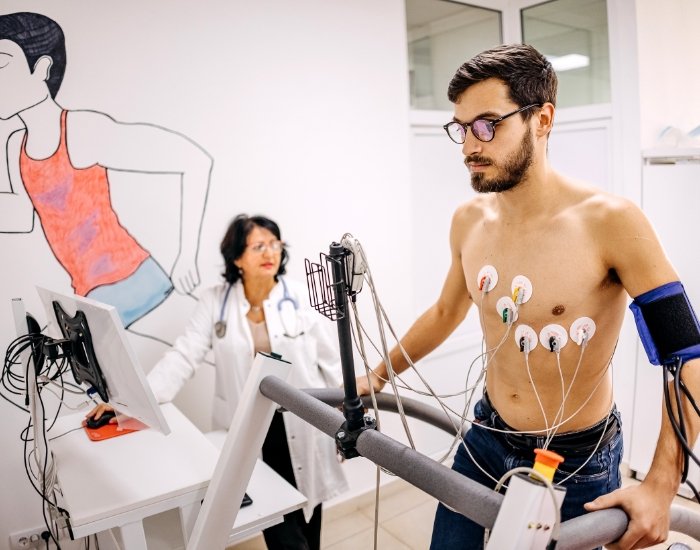
You change into a gown or open your shirt, lie on an exam table, the technician places 10 electrodes, you lie still for about 10 seconds while the recording is made, and the electrodes are removed.
| Step | Time |
|---|---|
| Check-in and changing | 2–3 minutes |
| Skin preparation (cleaning, small areas shaved if needed) | 1–2 minutes |
| Placing 10 electrodes (6 on the chest, 1 on each arm and leg) | 2–3 minutes |
| Recording while you lie still | About 10 seconds |
| Removing electrodes | 1 minute |
You may be asked to breathe normally and avoid talking during the recording. If the tracing is unclear, the technician may repeat it, which adds a minute or two.
How Should You Prepare for an EKG?
No fasting or special preparation is needed; wear clothes that allow easy access to your chest, avoid oils and lotions on the skin, and bring a list of your medicines.
- Wear a two-piece outfit so you only need to remove your top.
- Avoid lotions, oils or powders on your chest, arms and legs on the day of the test.
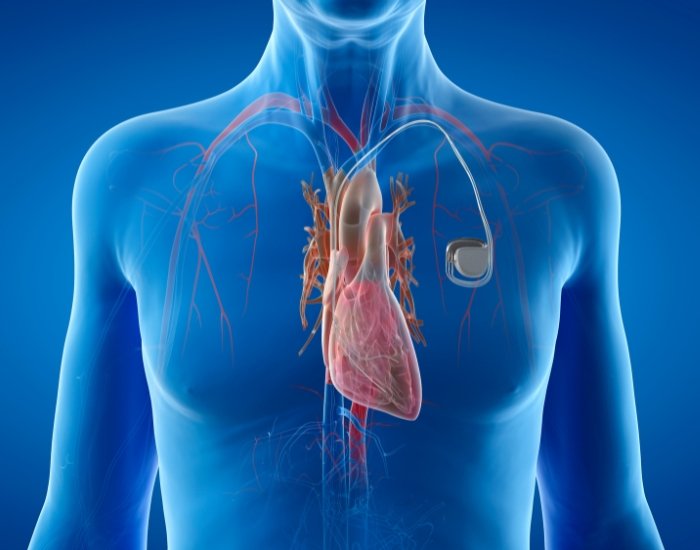
- Tell the technician if you have a pacemaker or defibrillator.
- Continue your usual medicines unless told otherwise.
- Avoid heavy exercise or cold drinks right before the test, which can change the tracing.
When to seek care right away
Call 911 for:
- Chest pain or pressure
- Fainting
- Severe shortness of breath
- A racing heartbeat with dizziness
Call your doctor the same day for:
- Palpitations that come and go
- Chest discomfort with exertion
- Unexplained fatigue or breathlessness
- An abnormal EKG found before surgery
What Can an EKG Detect?
An EKG can detect abnormal heart rhythms, signs of a current or past heart attack, reduced blood flow, thickened heart walls, conduction problems, electrolyte imbalances and effects of some medicines.
- Atrial fibrillation, atrial flutter and other arrhythmias
- Heart block and slow rhythms
- Signs of a heart attack in progress or a prior one
- Strain or thickening of the heart muscle (often from high blood pressure)
- Pericarditis
- Abnormal potassium or calcium levels
- Effects of medicines that prolong the QT interval
What Can an EKG Miss?
A resting EKG can be normal even with significant artery blockages or rhythm problems that come and go, which is why stress tests, monitors or imaging are sometimes needed.
Because it is a 10-second snapshot at rest, an EKG may miss palpitations that occur occasionally or chest pain that appears only with exertion. Your doctor may then order a Holter monitor, event monitor, exercise stress test or echocardiogram.
How Long Do Other EKG-Based Tests Take?
An exercise stress test takes about 45 to 60 minutes, a nuclear stress test several hours, a Holter monitor 24 to 48 hours, an extended patch 7 to 14 days and an event monitor up to 30 days.
| Test | Typical duration | Purpose |
|---|---|---|
| Resting 12-lead EKG | 5–10 minutes | Snapshot of rhythm and heart health |
| Exercise stress test | 45–60 minutes (10–15 minutes of exercise) | Heart response to exertion |
| Nuclear stress test | 3–4 hours | Blood flow images at rest and stress |
| Holter monitor | 24–48 hours | Continuous rhythm recording |
| Event monitor or patch | 7–30 days | Catch infrequent symptoms |
See nuclear cardiac testing and Holter monitor restrictions.
How Quickly Are EKG Results Available?
The tracing is available immediately, and in an office or emergency setting a doctor often reviews it within minutes; a formal cardiologist reading may follow within a day or two.
Many EKG machines print an automated interpretation, but these computer readings can be wrong and must be confirmed by a physician. Ask your doctor to explain any findings such as “nonspecific ST-T changes,” “left ventricular hypertrophy” or “bundle branch block,” which may or may not be significant depending on your symptoms and history.
Who Needs an EKG and How Often?
An EKG is recommended for anyone with chest pain, palpitations, fainting, breathlessness or dizziness, before certain surgeries, when starting some medicines, and periodically for people with heart disease; it is not routinely recommended as a yearly screening test for low-risk adults without symptoms.
Common reasons for an EKG
- Chest pain, pressure or discomfort
- Palpitations, a racing or irregular heartbeat
- Fainting, near fainting or unexplained dizziness
- Shortness of breath or reduced exercise tolerance
- High blood pressure, to look for heart strain
- Before surgery in people with heart risk factors
- Starting medicines that can affect heart rhythm, such as some antibiotics, antidepressants and antiarrhythmics
- Follow-up for known heart disease, pacemakers or after a heart attack
- Pre-participation screening in some athletes
Is a yearly EKG necessary?
For adults at low risk with no symptoms, routine yearly EKGs are generally not recommended, because they rarely change care and can lead to unnecessary follow-up testing. People with diabetes, high blood pressure, heart disease, a family history of sudden cardiac death or symptoms should follow their doctor’s advice on how often to repeat it.
What about smartwatch EKGs?
Single-lead smartwatch EKGs can detect atrial fibrillation and help capture palpitations in the moment. They cannot replace a 12-lead EKG, which looks at the heart from 12 angles and can show signs of heart attack, strain and conduction problems that a single lead misses. If your watch flags an irregular rhythm, save the tracing and bring it to your appointment.
Cost and insurance
A resting EKG is one of the least expensive heart tests, and it is generally covered by Medicare and most insurance plans when ordered for symptoms or medical reasons. See insurance we accept.
How Can You Help Get an Accurate EKG?
Lie still, breathe normally, keep your arms and legs relaxed, avoid talking, and tell the technician about any symptoms you are having at that moment.
Shivering, talking or tensing muscles can create artifact that looks like abnormal rhythms. If you feel palpitations or chest discomfort during the test, say so right away; capturing an EKG during symptoms is especially valuable. Bring a copy of any previous EKG if you are a new patient, because comparison with older tracings helps your cardiologist spot changes.
Where to See a Cardiologist in Houston
Epic Heart & Vascular Center evaluates heart and vascular symptoms at three Greater Houston offices, with many tests such as ECGs and echocardiograms available on site. Care is led by Dr. M. Usman Khan, MD, FACC.
Also serving Richmond, Spring, Kingwood, Willowbrook and Eldridge patients. Monday to Friday, 8:00 am to 5:00 pm.
Key Takeaways
- A resting EKG takes about 5 to 10 minutes; the recording itself lasts about 10 seconds.
- No fasting is needed; avoid lotions and wear a two-piece outfit.
- It detects rhythm problems, signs of heart attack, heart strain and electrolyte issues.
- A normal resting EKG can miss intermittent rhythms and blockages that appear with exertion.
- Stress tests and monitors take longer and answer different questions.
Frequently Asked Questions
How long does an EKG take?
A standard resting EKG takes about 5 to 10 minutes, with about 10 seconds of actual recording.
Do I need to fast before an EKG?
No. A resting EKG requires no fasting. Stress tests may have specific instructions.
Does an EKG hurt?
No. The electrodes are painless, though removing them may feel like peeling off a bandage.
Can an EKG detect a blocked artery?
Not reliably at rest. It may show signs of a past heart attack or strain, but a stress test or imaging is often needed to find blockages.
How soon will I get my EKG results?
The tracing is ready immediately; a doctor usually reviews it the same day.
Is an ECG the same as an EKG?
Yes. Both terms mean electrocardiogram; EKG comes from the German spelling.
Sources and Further Reading
Medical disclaimer: This article is for general education and does not replace a visit with your own doctor. Symptoms, test results and treatment choices differ from person to person.
Please note: Reading this article does not create a doctor–patient relationship. If you think you are having a medical emergency, call 911.

About our cardiology practice
Dr. M. Usman Khan, MD, FACC
Dr. Khan is an interventional and general cardiologist who leads care at Epic Heart & Vascular Center, with offices in Northwest Houston, Tomball and Sugar Land. He completed his cardiovascular fellowship at the University of Virginia and holds fellowships in the American College of Cardiology, the American College of Physicians, the Society for Cardiovascular Angiography and Interventions and the American Society of Nuclear Cardiology.
This guide was written by the Epic Heart & Vascular Center editorial team from the sources listed above. Meet Dr. Khan →