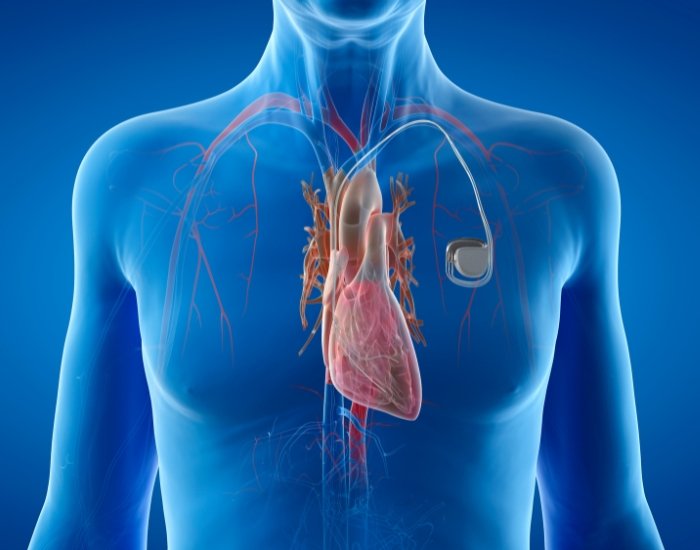
Many heart problems only show up when the heart is working hard. At rest, a heart with a narrowed artery may look and beat normally. An echo stress test, also called a stress echocardiogram, captures images of the heart before and immediately after exertion so your cardiologist can see how each wall of the heart responds to increased demand.
The test uses ultrasound rather than radiation, takes about an hour, and gives detailed information about blood flow, pumping strength and valves. This guide explains why it is ordered, how to prepare, what happens during the test and how results guide next steps.
Quick answer
An echo stress test uses ultrasound images of the heart taken at rest and immediately after exercise (or after a medicine called dobutamine) to see whether any part of the heart muscle stops contracting normally under stress, which suggests a blocked coronary artery. Doctors order it to evaluate chest pain or breathlessness, check known coronary disease, assess valve problems, judge fitness before surgery, and guide treatment. It involves no radiation and usually takes 45 to 60 minutes.
Have symptoms you want checked? Dr. M. Usman Khan sees patients at our Northwest Houston, Tomball and Sugar Land offices.
What patients say about our care team
Read all reviews on Google- ★★★★★
The staff was amazing, very friendly and attentive.
— Stephanie G. Google review - ★★★★★
He explained everything to me!
— Yesenia B. Google review - ★★★★★
Everyone is incredibly supportive and the standard of care is top tier.
— Humzah A. Google review - ★★★★★
It's always good when someone cares, not just comes to work.
— Cecila A. Google review - ★★★★★
I felt like I waited less time and was seen much faster!
— Yesenia B. Google review
- ★★★★★
I am extremely grateful for the support and compassion.
— Debra L. W. Google review - ★★★★★
She always takes great care of me.
— Shemeanna B. Google review - ★★★★★
Her clinical skills were exemplary. I would definitely recommend.
— Humzah A. Google review - ★★★★★
I had a great experience with my appointment today.
— Stephanie G. Google review - ★★★★★
Mrs. Maxine literally listened to my concerns.
— Cecila A. Google review
Important
Chest pain at rest or lasting more than a few minutes needs 911, not a scheduled stress test.
Why Do Doctors Order an Echo Stress Test?
To look for coronary artery disease in people with chest pain or breathlessness, to assess the significance of known blockages, to evaluate valve disease and pulmonary pressures with exercise, and to check heart risk before surgery.
- Chest pain, pressure or breathlessness with exertion.
- Abnormal ECG or calcium score.
- Follow-up after stents or bypass when symptoms return.
- Valve disease such as aortic stenosis or mitral regurgitation with unclear symptoms.
- Pre-operative risk assessment.
- Guiding safe exercise levels or cardiac rehab.
How Does an Echo Stress Test Work?
When the heart works harder, healthy muscle contracts more vigorously; muscle supplied by a narrowed artery may contract weakly, and this wall motion abnormality is visible on ultrasound.
Images taken at rest are compared side by side with images taken at peak stress. See stress echocardiogram.
How Should You Prepare?
Wear comfortable shoes and clothes, avoid caffeine for about 12 to 24 hours if instructed, eat lightly or fast as directed, and ask whether to hold beta-blockers or other heart medicines.
- Wear walking shoes and a two-piece outfit.
- Avoid caffeine if instructed, including decaf, tea, chocolate and energy drinks.
- Ask about holding beta-blockers, calcium channel blockers or nitrates.
- Bring an inhaler if you use one.
- Bring a medicine list.
What Happens During the Test?
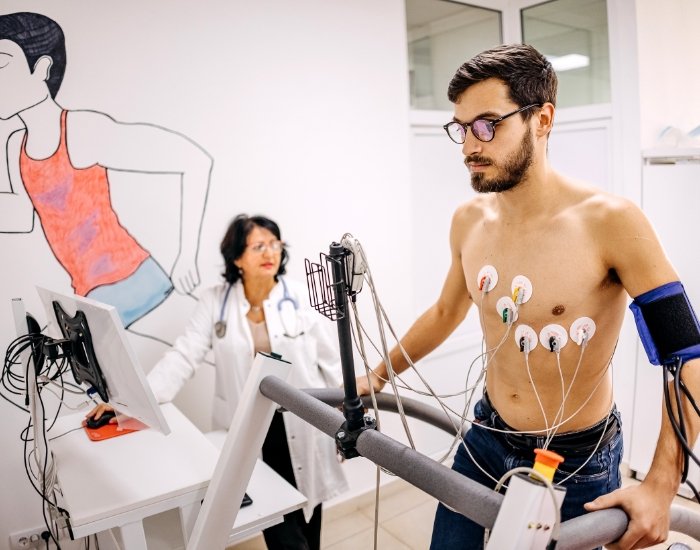
ECG leads are placed, resting echo images taken, you walk on a treadmill with increasing speed and incline, and images are captured within about a minute of stopping.
| Step | What happens | Time |
|---|---|---|
| Preparation | ECG electrodes, blood pressure cuff | 10 min |
| Resting echo | Ultrasound probe on chest | 10–15 min |
| Exercise | Treadmill, Bruce protocol | 6–12 min |
| Peak images | Quick ultrasound right after exercise | 1–2 min |
| Recovery | Monitoring until heart rate settles | 5–10 min |
What if You Cannot Exercise?
A dobutamine stress echo uses an IV medicine to make the heart beat faster and stronger, mimicking exercise, for people with arthritis, lung disease or other limits.
Contrast (an ultrasound-enhancing agent) may also be used to sharpen images in people with difficult views.
When to seek care right away
Call 911 for:
- Chest pain at rest
- Chest pain lasting more than a few minutes
- Fainting
- Severe shortness of breath
Call your doctor the same day for:
- Chest pressure with exertion
- New breathlessness with activity
- Unusual fatigue
- Known valve disease with new symptoms
What Do the Results Mean?
A normal result shows all heart walls thicken more with stress; an abnormal result shows a wall that contracts poorly at peak stress, suggesting a significant blockage in the supplying artery.
Exercise capacity, blood pressure response, ECG changes and symptoms are also reported. An abnormal test may lead to coronary angiography. See abnormal stress test results.
How Does It Compare With Other Stress Tests?
Compared with a plain exercise ECG test it is more accurate; compared with a nuclear stress test it avoids radiation and is shorter, while nuclear testing may be better when images are hard to obtain.
| Exercise ECG | Echo stress | Nuclear stress | |
|---|---|---|---|
| Imaging | None | Ultrasound | Radioactive tracer |
| Radiation | No | No | Yes |
| Duration | 30–45 min | 45–60 min | 2–4 hours |
| Accuracy | Moderate | High | High |
See cardiac stress tests explained and nuclear stress test.
What Will You Feel During the Test?
You will feel your heart beat faster and breathe harder, much like brisk exercise; tell the team immediately about chest pain, dizziness or severe breathlessness, which are reasons to stop.
Sticky ECG electrodes may irritate skin slightly. The ultrasound gel is cool, and the probe presses firmly on the chest. During dobutamine testing, palpitations, flushing or a mild headache are common and fade quickly after the infusion stops.
Safety of stress echocardiography
The test is supervised by trained staff with emergency equipment present. Serious complications such as heart attack or dangerous arrhythmias are rare. People with unstable angina, severe uncontrolled high blood pressure, severe symptomatic aortic stenosis or acute illness generally should not have a stress test until those issues are addressed.
What Happens After an Echo Stress Test?
Most people resume normal activities right away; your cardiologist reviews the images and, depending on the result, may reassure you, adjust medicines, order coronary CT or recommend cardiac catheterization.
| Result | Typical next step |
|---|---|
| Normal, good exercise capacity | Low short-term risk; focus on prevention |
| Mildly abnormal or inconclusive | Medicines, coronary CT or repeat imaging |
| Clearly abnormal, large area affected | Cardiac catheterization and possible stent or bypass |
| Valve findings | Surveillance echo or valve intervention planning |
Exercise capacity matters too
How long you can exercise on the treadmill, measured in METs, is one of the strongest predictors of long-term health. Even with a normal image result, a low exercise capacity is a signal to build fitness, ideally through a structured program. Your report will include this number, and your cardiologist can use it to set safe exercise targets.
How Often Should an Echo Stress Test Be Repeated?
There is no routine schedule; repeat testing is guided by new or changing symptoms, a change in known heart disease, or specific valve or pre-surgical questions, not by the calendar alone.
People without symptoms generally do not need repeat stress tests. If your chest discomfort or breathlessness changes, contact your cardiologist rather than waiting for a set interval. Medicare and most insurance plans cover stress echocardiography when it is medically indicated; see insurance we accept.
Is an Echo Stress Test a Good Choice for Women?
Yes. Exercise ECG tests are less accurate in women, so adding echocardiographic imaging improves accuracy without radiation, which makes stress echo a preferred option for many women with chest symptoms.
If a stress test is normal but symptoms such as chest discomfort, breathlessness or unusual fatigue persist, tell your cardiologist. Some women have coronary microvascular disease or coronary spasm, which may need specialized testing beyond a standard stress test. See heart disease signs in women.
What Are the Limitations of an Echo Stress Test?
Image quality can be limited by body size, lung disease or chest shape, and the test can miss small blockages or microvascular disease; contrast agents or an alternative test can address these limits.
No stress test is perfect, so your cardiologist interprets results together with your symptoms and risk factors.
Where Can You Get an Echo Stress Test Near Houston?
Epic Heart & Vascular Center performs stress echocardiography in its offices, so testing and the cardiologist review happen in one place.
Ask your physician for a referral, or request an appointment with us directly.
Where to See a Cardiologist in Houston
Epic Heart & Vascular Center evaluates heart and vascular symptoms at three Greater Houston offices, with many tests such as ECGs and echocardiograms available on site. Care is led by Dr. M. Usman Khan, MD, FACC.
Also serving Richmond, Spring, Kingwood, Willowbrook and Eldridge patients. Monday to Friday, 8:00 am to 5:00 pm.
Key Takeaways
- An echo stress test shows how the heart walls move under stress.
- It is ordered for chest pain, breathlessness, known CAD, valve disease and pre-surgical risk.
- There is no radiation; the test takes about an hour.
- Dobutamine is used when you cannot exercise.
- An abnormal result may lead to angiography or treatment changes.
Frequently Asked Questions
What is an echo stress test?
An ultrasound of the heart taken at rest and right after exercise or dobutamine to check blood flow.
Is an echo stress test safe?
Yes. Serious complications are rare and the test is closely monitored.
How long does an echo stress test take?
About 45 to 60 minutes.
Can I eat before an echo stress test?
Usually a light meal is allowed; follow your instructions about caffeine and fasting.
What if I cannot walk on a treadmill?
A dobutamine stress echo uses medicine instead of exercise.
How accurate is an echo stress test?
It is more accurate than an exercise ECG alone and comparable to nuclear testing in experienced hands.
Sources and Further Reading
- MedlinePlus. Echocardiogram.
- MedlinePlus. Exercise stress test.
- National Heart, Lung, and Blood Institute. Coronary Heart Disease.
Medical disclaimer: This article is for general education and does not replace a visit with your own doctor. Symptoms, test results and treatment choices differ from person to person.
Please note: Reading this article does not create a doctor–patient relationship. If you think you are having a medical emergency, call 911.

About our cardiology practice
Dr. M. Usman Khan, MD, FACC
Dr. Khan is an interventional and general cardiologist who leads care at Epic Heart & Vascular Center, with offices in Northwest Houston, Tomball and Sugar Land. He completed his cardiovascular fellowship at the University of Virginia and holds fellowships in the American College of Cardiology, the American College of Physicians, the Society for Cardiovascular Angiography and Interventions and the American Society of Nuclear Cardiology.
This guide was written by the Epic Heart & Vascular Center editorial team from the sources listed above. Meet Dr. Khan →
Related Articles
Everything You Need to Know About Cardiac Stress Tests
Cardiac stress tests show how the heart performs under exertion. Compare exercise ECG, stress echo, nuclear and pharmacologic tests, learn how to…
What Abnormal Stress Test Results Mean for Your Heart Health
An abnormal stress test can mean a blocked coronary artery, but it can also reflect a false positive, a prior heart attack…
Being Aware of Nuclear Cardiology: Tests, Safety and What to Expect
Nuclear cardiology uses small amounts of radioactive tracers to show blood flow to the heart muscle, heart function and viability. Learn about…