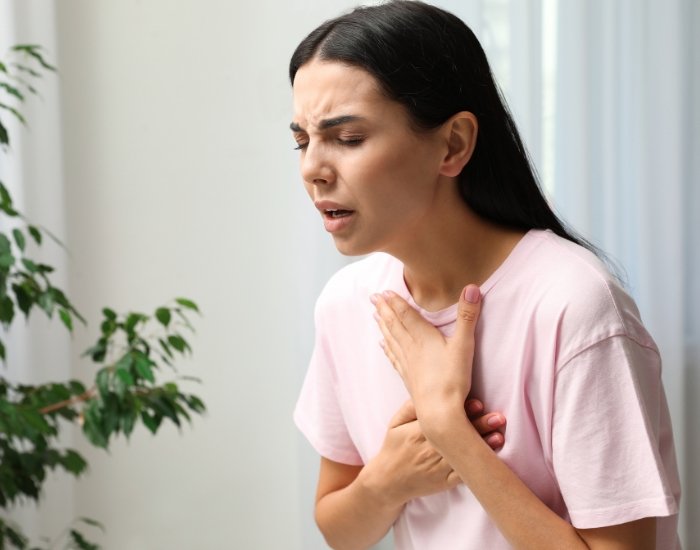
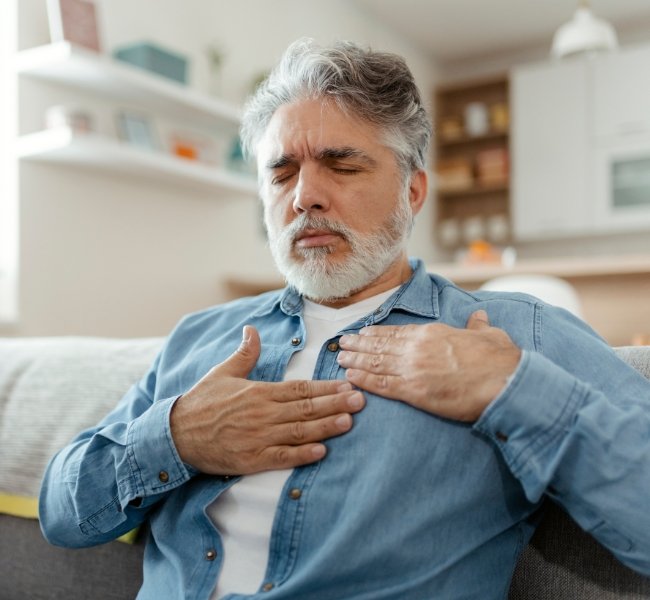
Chest discomfort after a big dinner is so common that most people simply reach for an antacid. Usually that is reasonable: reflux, trapped gas and gallbladder attacks are frequent and closely tied to meals. But eating also raises the heart’s workload, because blood is diverted to the digestive system. In people with narrowed heart arteries, a heavy meal can bring on angina, and occasionally a heart attack.
This guide explains the digestive and cardiac causes of chest pain after eating, the features that help tell them apart, and when to get checked rather than treat it at home.
Quick answer
Chest pain after eating is most often caused by acid reflux, indigestion, trapped gas, esophageal spasm or gallbladder problems. But a large meal increases the heart’s demand for oxygen, so people with coronary artery disease can develop angina after eating, sometimes called postprandial angina. Call 911 if the pain feels like pressure or squeezing, spreads to the arm, jaw, neck or back, or comes with shortness of breath, sweating, nausea or lightheadedness.
Have symptoms you want checked? Dr. M. Usman Khan sees patients at our Northwest Houston, Tomball and Sugar Land offices.
What patients say about our care team
Read all reviews on Google- ★★★★★
The staff was amazing, very friendly and attentive.
— Stephanie G. Google review - ★★★★★
He explained everything to me!
— Yesenia B. Google review - ★★★★★
Everyone is incredibly supportive and the standard of care is top tier.
— Humzah A. Google review - ★★★★★
It's always good when someone cares, not just comes to work.
— Cecila A. Google review - ★★★★★
I felt like I waited less time and was seen much faster!
— Yesenia B. Google review
- ★★★★★
I am extremely grateful for the support and compassion.
— Debra L. W. Google review - ★★★★★
She always takes great care of me.
— Shemeanna B. Google review - ★★★★★
Her clinical skills were exemplary. I would definitely recommend.
— Humzah A. Google review - ★★★★★
I had a great experience with my appointment today.
— Stephanie G. Google review - ★★★★★
Mrs. Maxine literally listened to my concerns.
— Cecila A. Google review
Important
Heart attacks are often mistaken for indigestion, especially in women, older adults and people with diabetes. If antacids do not help within a few minutes and the pain feels unusual, call 911.
Why Can Eating Cause Chest Pain?
Eating stretches the stomach, triggers acid production and esophageal contractions, and diverts blood to the gut, which raises the heart’s workload.
After a meal, the stomach expands and pushes up on the diaphragm, acid production rises, and the lower esophageal valve may relax, allowing reflux. At the same time, blood flow to the intestines increases sharply and heart rate rises slightly to supply it. For a healthy heart this is trivial. For a heart with narrowed arteries, the extra demand can tip the balance and cause angina.
What Digestive Problems Cause Chest Pain After Eating?
Acid reflux, indigestion, esophageal spasm, hiatal hernia, gallstones, stomach ulcers, food intolerance with gas and pancreatitis are the main digestive causes.
- Acid reflux (GERD): burning behind the breastbone within an hour of eating, worse lying down or bending, with a sour taste.
- Indigestion (dyspepsia): fullness, bloating and upper abdominal or lower chest discomfort.
- Esophageal spasm: sudden squeezing pain, sometimes with trouble swallowing. See chest pain when swallowing.
- Hiatal hernia: pressure and reflux after large meals.
- Gallstones: steady pain in the right upper abdomen or center of the chest 30 to 60 minutes after a fatty meal. See right upper quadrant pain.
- Peptic ulcer: burning upper abdominal pain that may improve or worsen with food.
- Gas and food intolerance: bloating and sharp, shifting pain. See constipation and chest pain.
- Pancreatitis: severe upper abdominal pain spreading to the back, with vomiting.
Can a Heart Problem Cause Chest Pain After Eating?
Yes. Angina can be triggered by a heavy meal, especially combined with walking or stress afterward, and a heart attack can occur after a meal.
Postprandial angina is classically described as chest pressure that comes on after a large meal, particularly if you then walk, climb stairs or go out into cold air. It usually eases with rest within minutes. Its presence suggests significant coronary artery disease and needs evaluation. Read about coronary artery disease.
Palpitations after eating are a related complaint and are often from extra beats or reflux. See heart palpitations after eating.
How Can You Tell Heartburn From Heart Pain?
Heartburn burns, rises toward the throat and eases with antacids or sitting up; heart pain feels like pressure, may spread to the arm or jaw, comes with exertion or breathlessness and eases with rest.
| Feature | Heartburn and digestion | Heart (angina) |
|---|---|---|
| Feel | Burning, sour, bloated | Pressure, squeezing, heaviness |
| Timing | Within an hour of eating; lying down | After eating plus walking, stress or cold |
| Spread | Up toward the throat | Arm, jaw, neck, back |
| Relief | Antacids, sitting up, belching | Rest; nitroglycerin if prescribed |
| Other symptoms | Sour taste, belching, bloating | Breathlessness, sweating, nausea, dizziness |
Antacid relief is not proof. Up to a third of people evaluated for chest pain have more than one cause, and heart pain can coincidentally ease when you sit down. Read heart attack vs. heartburn.
When to seek care right away
Call 911 for:
- Pressure or squeezing pain that does not ease within minutes
- Pain spreading to the arm, jaw, neck or back
- Shortness of breath, sweating, nausea or lightheadedness
- Severe upper abdominal pain with vomiting
Call your doctor the same day for:
- Chest discomfort after meals plus exertion
- Heartburn more than twice a week
- Pain after fatty meals in the right upper abdomen
- Trouble swallowing or weight loss
How Do Doctors Find the Cause?
An ECG and, when needed, troponin come first to rule out the heart; then stress testing, abdominal ultrasound, endoscopy or other digestive tests follow based on the pattern.
- ECG: quick check for heart strain. See ECG testing.
- Stress test: if symptoms suggest angina. See exercise stress testing.
- Abdominal ultrasound: for gallstones.
- Upper endoscopy: for reflux damage, ulcers or hernia.
- Blood tests: liver, pancreas and blood count.
How Can You Prevent Chest Pain After Meals?
Eat smaller meals, slow down, limit fatty, spicy and acidic foods and alcohol, avoid lying down for three hours after eating, avoid strenuous activity right after large meals and treat underlying heart or digestive disease.
- Have four or five smaller meals instead of two or three large ones.
- Wait two to three hours after eating before lying down or exercising hard.
- Limit fried and fatty foods, chocolate, peppermint, spicy dishes, citrus, caffeine and alcohol if they trigger reflux.
- Raise the head of your bed six inches if nighttime reflux is a problem.
- If you have angina, ask your cardiologist about adjusting medicines and avoid walking briskly in the cold right after a heavy meal.
Who Should Take Chest Pain After Eating More Seriously?
People over 40, and anyone with diabetes, high blood pressure, high cholesterol, smoking history, kidney disease, a family history of early heart disease or known heart disease should have chest pain after meals checked rather than assume it is reflux.
Age and risk factors change how doctors interpret the same symptom. A 25-year-old with classic burning after spicy food is very likely to have reflux. A 58-year-old with diabetes who feels chest pressure after dinner and then while walking the dog needs a heart evaluation even if the pain also seems related to food.
- Diabetes can blunt pain signals, so heart symptoms may be mild or feel like indigestion.
- Women more often have heart symptoms such as nausea, upper abdominal discomfort and fatigue.
- Older adults are more likely to have both reflux and coronary disease at once.
- Anyone whose heartburn is new after age 50, or whose symptoms have changed, should be evaluated.
What to tell your doctor
Describe what you ate, how soon the pain started, whether you were active afterward, how long it lasted and what helped. Mention any shortness of breath, sweating, palpitations or lightheadedness. That history, plus an ECG, often points clearly toward the stomach or the heart.
Where to See a Cardiologist in Houston
Epic Heart & Vascular Center evaluates heart and vascular symptoms at three Greater Houston offices, with many tests such as ECGs and echocardiograms available on site. Care is led by Dr. M. Usman Khan, MD, FACC.
Also serving Richmond, Spring, Kingwood, Willowbrook and Eldridge patients. Monday to Friday, 8:00 am to 5:00 pm.
Key Takeaways
- Most chest pain after eating comes from reflux, indigestion, gas, spasm or the gallbladder.
- Large meals raise the heart’s workload and can trigger angina in people with coronary disease.
- Pressure-type pain spreading to the arm or jaw, or with breathlessness or sweating, needs 911.
- Antacid relief does not rule out the heart.
- Smaller meals and waiting before exercise or lying down prevent many episodes.
Frequently Asked Questions
Why does my chest hurt after I eat?
Usually from acid reflux, indigestion, gas or esophageal spasm. Less often, a meal brings on angina in people with narrowed heart arteries.
Can eating trigger a heart attack?
A large meal can increase strain on the heart and has been linked to heart attacks in people with existing coronary disease. Chest pressure after a meal with other symptoms needs urgent care.
How do I know if chest pain after eating is heartburn?
Heartburn usually burns, rises toward the throat, comes with a sour taste and improves with antacids or sitting up.
Can gallbladder problems cause chest pain after eating?
Yes. Gallstone pain often starts 30 to 60 minutes after a fatty meal in the upper abdomen and can be felt in the chest or right shoulder.
What should I do if antacids do not help my chest pain?
If pain does not improve within a few minutes or feels like pressure, spreads or comes with breathlessness or sweating, call 911.
Can palpitations after eating be serious?
Usually not, but frequent or prolonged palpitations, or palpitations with dizziness or chest pain, should be evaluated.
Sources and Further Reading
- MedlinePlus. Chest Pain.
- NIDDK. Acid Reflux (GER and GERD) in Adults.
- National Heart, Lung, and Blood Institute. Angina.
- American Heart Association. Warning Signs of a Heart Attack.
- MedlinePlus. Indigestion.
Medical disclaimer: This article is for general education and does not replace a visit with your own doctor. Symptoms, test results and treatment choices differ from person to person.
Please note: Reading this article does not create a doctor–patient relationship. If you think you are having a medical emergency, call 911.

About our cardiology practice
Dr. M. Usman Khan, MD, FACC
Dr. Khan is an interventional and general cardiologist who leads care at Epic Heart & Vascular Center, with offices in Northwest Houston, Tomball and Sugar Land. He completed his cardiovascular fellowship at the University of Virginia and holds fellowships in the American College of Cardiology, the American College of Physicians, the Society for Cardiovascular Angiography and Interventions and the American Society of Nuclear Cardiology.
This guide was written by the Epic Heart & Vascular Center editorial team from the sources listed above. Meet Dr. Khan →
Related Articles
Heart Attack vs Heartburn: Here’s How to Tell Them Apart
Heartburn and heart attack can both cause burning chest discomfort. Learn the differences in triggers, timing and accompanying symptoms, the red flags…
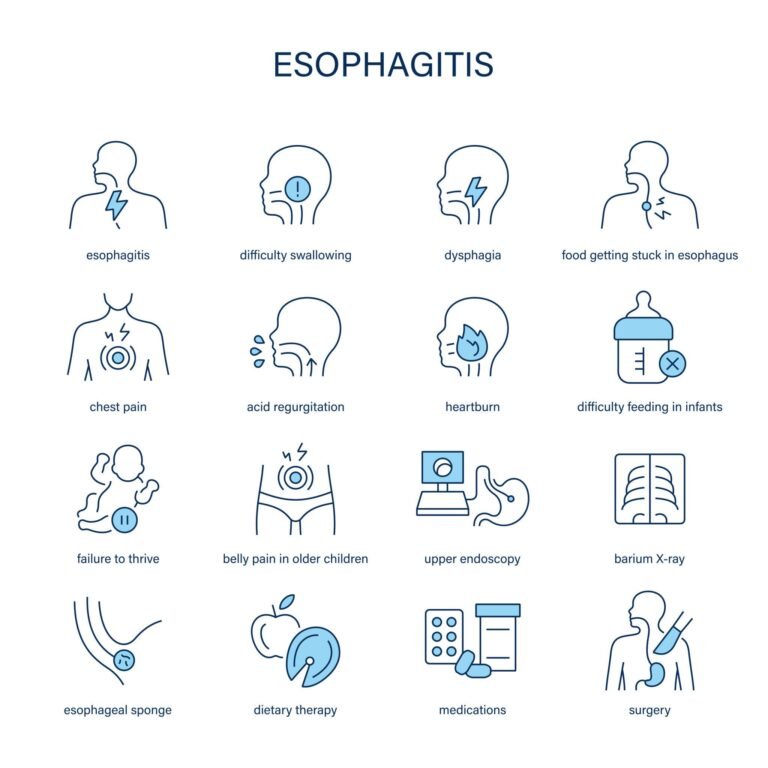
Chest Pain When Swallowing: 7 Causes and When to See a Doctor
Pain in the chest when you swallow usually comes from the esophagus, such as reflux, spasm, pill irritation or a stricture. Learn…
Heart Palpitations After Eating: Causes, Triggers and When to Worry
A racing, pounding or skipping heartbeat after meals is common. Learn the food and digestive triggers, the heart rhythm problems to rule…