Nearly half of American adults have high blood pressure, and many do not know it. Some of the reasons, such as age, family history and genetics, cannot be changed. But a large share of the risk comes from factors that can be changed, and changing them often lowers blood pressure as much as a medicine would.
This guide separates the fixed risk factors from the ones you can act on, ranks the changes by how much they typically help, and explains how to put them into practice. Lifestyle steps work best alongside, not instead of, medicines when those are needed.
Quick answer
Risk factors for high blood pressure you cannot change include age, family history, race and ethnicity, and sex. Risk factors you can change include high sodium intake, low potassium intake, excess weight, physical inactivity, alcohol, smoking, poor sleep and sleep apnea, chronic stress, and certain medicines such as NSAIDs and decongestants. The biggest single changes are weight loss, the DASH eating pattern, lowering sodium, regular aerobic exercise and limiting alcohol, each of which can lower systolic pressure by several points and together by much more.
Have symptoms you want checked? Dr. M. Usman Khan sees patients at our Northwest Houston, Tomball and Sugar Land offices.
What patients say about our care team
Read all reviews on Google- ★★★★★
The staff was amazing, very friendly and attentive.
— Stephanie G. Google review - ★★★★★
He explained everything to me!
— Yesenia B. Google review - ★★★★★
Everyone is incredibly supportive and the standard of care is top tier.
— Humzah A. Google review - ★★★★★
It's always good when someone cares, not just comes to work.
— Cecila A. Google review - ★★★★★
I felt like I waited less time and was seen much faster!
— Yesenia B. Google review
- ★★★★★
I am extremely grateful for the support and compassion.
— Debra L. W. Google review - ★★★★★
She always takes great care of me.
— Shemeanna B. Google review - ★★★★★
Her clinical skills were exemplary. I would definitely recommend.
— Humzah A. Google review - ★★★★★
I had a great experience with my appointment today.
— Stephanie G. Google review - ★★★★★
Mrs. Maxine literally listened to my concerns.
— Cecila A. Google review
Important
Blood pressure above 180/120 with chest pain, breathlessness, severe headache, confusion or vision changes needs 911.
Which Risk Factors Cannot Be Changed?
Age, family history, genetics, race and ethnicity, and sex all influence blood pressure risk.
- Age: arteries stiffen over time; most adults develop hypertension by older age.
- Family history: having a parent with hypertension raises your risk.
- Race and ethnicity: Black Americans develop hypertension earlier and more severely on average.
- Sex: men have higher rates before about 55; women’s risk rises after menopause.
Fixed risk factors mean you should check your blood pressure more often, not that hypertension is inevitable.
Which Risk Factors Can You Change?
Sodium, potassium, weight, activity, alcohol, smoking, sleep, stress and certain medicines.
| Change | Approximate systolic reduction |
|---|---|
| Weight loss (per ~1 kg lost) | About 1 mmHg |
| DASH eating pattern | About 8–14 mmHg |
| Reducing sodium | About 2–8 mmHg |
| Aerobic exercise 90–150 min/week | About 4–9 mmHg |
| Limiting alcohol | About 2–4 mmHg |
| Increasing potassium from food | About 4–5 mmHg |
Effects are larger in people who already have high blood pressure and add up when combined.
How Much Does Salt Matter?
Most Americans eat far more sodium than recommended; cutting back toward 1,500 to 2,300 mg a day lowers blood pressure, especially in salt-sensitive people.
Most sodium comes from packaged and restaurant foods, not the salt shaker. Read labels and cook at home more often. Salt substitutes that contain potassium can help many people but are not safe for those with kidney disease or on certain medicines.
How Do Weight and Activity Affect Blood Pressure?
Excess weight raises blood pressure, and losing even 5% to 10% of body weight lowers it; regular aerobic exercise lowers it independently.
Aim for at least 150 minutes of moderate activity weekly, such as brisk walking. Resistance and isometric exercise also help. See best exercises for heart health.
What About Alcohol and Smoking?
Alcohol raises blood pressure in a dose-dependent way; smoking causes immediate spikes and damages arteries.
Less alcohol is better; quitting smoking protects the heart and arteries even when its long-term effect on blood pressure is modest.
How Do Sleep, Sleep Apnea and Stress Raise Blood Pressure?
Short sleep, untreated sleep apnea and chronic stress raise adrenaline and blood pressure; sleep apnea is a common cause of resistant hypertension.
Loud snoring, gasping and daytime sleepiness should prompt a sleep evaluation.
Can Medicines and Supplements Raise Blood Pressure?
Yes. NSAIDs such as ibuprofen and naproxen, decongestants, some migraine drugs, stimulants, certain antidepressants, steroids, birth control pills and supplements like licorice can raise blood pressure.
Review all medicines and supplements with your doctor or pharmacist. Secondary causes such as kidney disease, thyroid disease and adrenal disorders should be considered in young people or those with resistant hypertension.
How Do You Put These Changes Into Practice?
Pick one or two changes, measure blood pressure at home, track progress and add steps over time; take medicines as prescribed if lifestyle alone is not enough.
See 6 easy ways to lower blood pressure, hypertension explained and high blood pressure treatment.
When to seek care right away
Call 911 for:
- Reading above 180/120 with symptoms
- Chest pain
- Severe headache, confusion or vision changes
- Weakness or speech trouble
Call your doctor the same day for:
- Home readings repeatedly above 130/80
- Hypertension under age 30
- Blood pressure uncontrolled on three medicines
- Loud snoring with high blood pressure
Why Is Home Blood Pressure Monitoring So Useful?
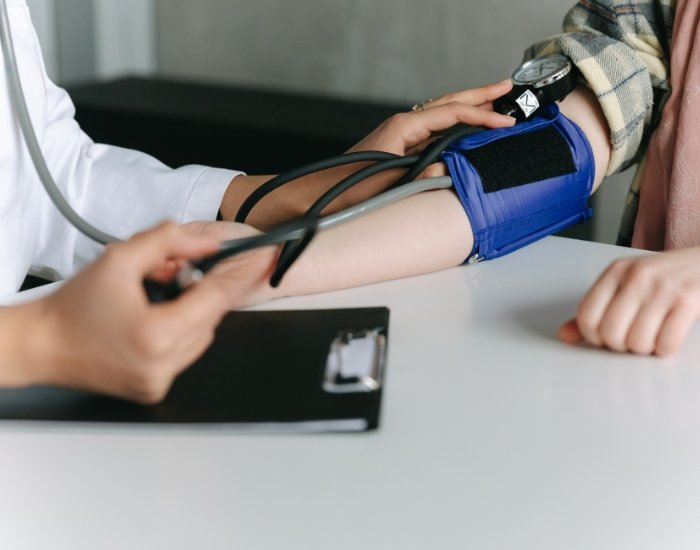
Home readings show your true average, detect white-coat and masked hypertension, show how lifestyle changes are working and help your doctor adjust medicines.
- Use a validated upper-arm cuff that fits your arm.
- Sit quietly for five minutes, back supported, feet flat, arm at heart level.
- Avoid caffeine, smoking and exercise for 30 minutes before.
- Take two readings one minute apart, morning and evening, for a week before visits.
- Record or upload the numbers and bring them to appointments.
Prediabetes, kidney disease and blood pressure
Insulin resistance and kidney disease both raise blood pressure, and high blood pressure in turn worsens both. Checking blood sugar and kidney function is part of a complete hypertension evaluation.
What Does a Blood Pressure-Friendly Diet Look Like?
The DASH pattern emphasizes vegetables, fruit, whole grains, low-fat dairy, beans, nuts, fish and poultry, and limits sodium, red and processed meat, sweets and sugary drinks.
| Food group | Daily or weekly goal (about 2,000 calories) |
|---|---|
| Vegetables | 4–5 servings a day |
| Fruit | 4–5 servings a day |
| Whole grains | 6–8 servings a day |
| Low-fat dairy | 2–3 servings a day |
| Nuts, seeds, legumes | 4–5 servings a week |
| Sweets | 5 or fewer a week |
Potassium-rich foods such as bananas, potatoes, beans, spinach and yogurt help counter sodium, but people with kidney disease should ask before increasing potassium. See best foods for heart health.
Can Young Adults Get High Blood Pressure?
Yes. Obesity, inactivity, high-sodium diets, alcohol, stimulant use, sleep apnea and kidney or hormonal disorders cause hypertension in young adults, and starting treatment early prevents decades of artery damage.
When Are Medicines Needed in Addition to Lifestyle Changes?
Medicines are generally recommended when blood pressure stays at or above 130/80 with high cardiovascular risk, diabetes or kidney disease, or at or above 140/90 for most others, or when lifestyle changes alone do not reach goal within a few months.
Common first-line medicines include thiazide-type diuretics, ACE inhibitors, ARBs and calcium channel blockers, often combined in a single pill. Taking medicines does not mean lifestyle changes stop mattering; they help medicines work better and may allow lower doses. See how high blood pressure affects the heart long term.
Which Stress-Reduction Techniques Lower Blood Pressure?
Regular aerobic exercise, slow breathing exercises, meditation, yoga or tai chi, adequate sleep and social connection have modest but real effects on blood pressure.
Does Pregnancy Affect Blood Pressure Risk Later in Life?
Yes. Preeclampsia, gestational hypertension and gestational diabetes raise the later risk of chronic hypertension, so women with these histories should have blood pressure checked at least yearly.
Tell every clinician about pregnancy complications, even decades later.
How Often Should Blood Pressure Be Checked?
Adults with normal readings should be checked at least every one to two years, and yearly or more often with elevated readings or risk factors.
Where to See a Cardiologist in Houston
Epic Heart & Vascular Center evaluates heart and vascular symptoms at three Greater Houston offices, with many tests such as ECGs and echocardiograms available on site. Care is led by Dr. M. Usman Khan, MD, FACC.
Also serving Richmond, Spring, Kingwood, Willowbrook and Eldridge patients. Monday to Friday, 8:00 am to 5:00 pm.
Key Takeaways
- Age, family history, race and sex are fixed risk factors.
- Sodium, weight, activity, alcohol, sleep and stress can be changed.
- DASH eating, weight loss and exercise give the largest drops.
- NSAIDs, decongestants and some supplements raise blood pressure.
- Combine lifestyle with medicines when needed.
Frequently Asked Questions
What are the main risk factors for high blood pressure?
Age, family history, high sodium, excess weight, inactivity, alcohol, smoking, poor sleep and stress.
Can high blood pressure be reversed with lifestyle changes?
Many people lower it substantially; some may no longer need medicine, but this depends on the individual.
How much does losing weight lower blood pressure?
Roughly 1 mmHg systolic per kilogram lost, on average.
Does stress cause high blood pressure?
Chronic stress contributes through hormones and behaviors like poor sleep and diet.
Is high blood pressure genetic?
Genes play a role, but lifestyle strongly influences whether it develops.
Which pain relievers raise blood pressure?
NSAIDs such as ibuprofen and naproxen.
Sources and Further Reading
- National Heart, Lung, and Blood Institute. High Blood Pressure: Causes and Risk Factors.
- Centers for Disease Control and Prevention. High Blood Pressure Risk Factors.
- National Heart, Lung, and Blood Institute. DASH Eating Plan.
- Jones DW, et al. 2025 AHA/ACC/Multisociety High Blood Pressure Guideline. PubMed.
Medical disclaimer: This article is for general education and does not replace a visit with your own doctor. Symptoms, test results and treatment choices differ from person to person.
Please note: Reading this article does not create a doctor–patient relationship. If you think you are having a medical emergency, call 911.

About our cardiology practice
Dr. M. Usman Khan, MD, FACC
Dr. Khan is an interventional and general cardiologist who leads care at Epic Heart & Vascular Center, with offices in Northwest Houston, Tomball and Sugar Land. He completed his cardiovascular fellowship at the University of Virginia and holds fellowships in the American College of Cardiology, the American College of Physicians, the Society for Cardiovascular Angiography and Interventions and the American Society of Nuclear Cardiology.
This guide was written by the Epic Heart & Vascular Center editorial team from the sources listed above. Meet Dr. Khan →
Related Articles
Hypertension (High Blood Pressure): Stages, Diagnosis and Treatment
A clear guide to hypertension: what the numbers mean, the stages, how it is diagnosed accurately, symptoms of a crisis, treatment goals…
Does Coffee Really Raise Blood Pressure? Is It Bad for Your Heart?
Caffeine causes a short-term rise in blood pressure, but moderate coffee drinking is not linked to long-term hypertension or heart disease in…

How Does High Blood Pressure Affect Heart Health Long Term?
Years of high blood pressure thicken and stiffen the heart, narrow the coronary arteries and set the stage for heart failure, atrial…