High blood pressure affects nearly half of American adults, and many people do not know they have it. Because it usually causes no symptoms, the first sign can be a heart attack, stroke or kidney damage. The good news is that blood pressure responds quickly to everyday choices.
You do not need a complete life overhaul. Each of the six changes below has strong scientific support, and several can lower systolic blood pressure by 4 to 11 points, about as much as a single medicine. Combining two or three of them often makes a big difference within weeks.
Quick answer
Six easy, proven ways to lower blood pressure are: cut sodium, eat more potassium-rich foods, walk or exercise most days, lose a little excess weight, limit alcohol and improve sleep, including treating sleep apnea. Each can lower systolic pressure by several points, and together the effect adds up. If your average is still 130/80 or higher after a few months, or 140/90 or higher at any point, talk with your doctor about medicine.
Have symptoms you want checked? Dr. M. Usman Khan sees patients at our Northwest Houston, Tomball and Sugar Land offices.
What patients say about our care team
Read all reviews on Google- ★★★★★
The staff was amazing, very friendly and attentive.
— Stephanie G. Google review - ★★★★★
He explained everything to me!
— Yesenia B. Google review - ★★★★★
Everyone is incredibly supportive and the standard of care is top tier.
— Humzah A. Google review - ★★★★★
It's always good when someone cares, not just comes to work.
— Cecila A. Google review - ★★★★★
I felt like I waited less time and was seen much faster!
— Yesenia B. Google review
- ★★★★★
I am extremely grateful for the support and compassion.
— Debra L. W. Google review - ★★★★★
She always takes great care of me.
— Shemeanna B. Google review - ★★★★★
Her clinical skills were exemplary. I would definitely recommend.
— Humzah A. Google review - ★★★★★
I had a great experience with my appointment today.
— Stephanie G. Google review - ★★★★★
Mrs. Maxine literally listened to my concerns.
— Cecila A. Google review
Important
A reading above 180/120 with chest pain, shortness of breath, severe headache, vision changes, weakness or confusion is an emergency. Call 911.
What Is a Healthy Blood Pressure?
For most adults, a healthy blood pressure is below 120/80; 120 to 129 systolic is elevated, and 130/80 or higher is hypertension under the 2025 AHA/ACC guideline.
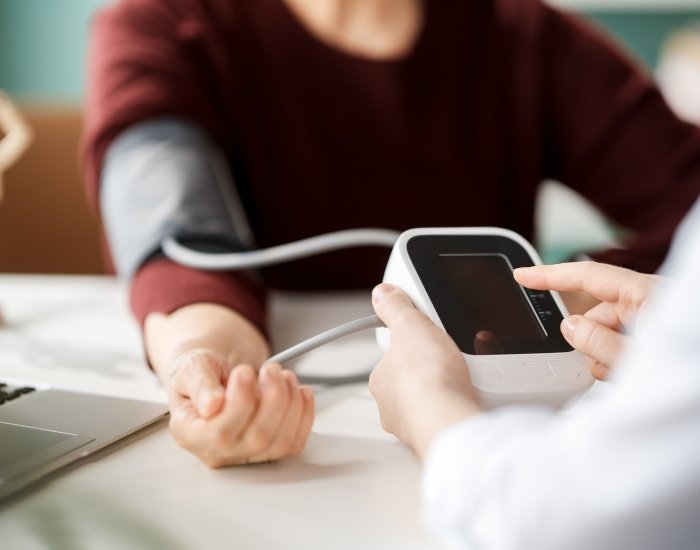
Measure at home with a validated upper-arm cuff, seated with your back supported, after five minutes of rest, and average two readings morning and evening for a week. Home readings help separate “white coat” effects from true hypertension. See what is hypertension.
What Are the 6 Easiest Ways to Lower Blood Pressure?
The six highest-impact everyday changes are reducing sodium, increasing potassium, regular physical activity, modest weight loss, limiting alcohol and getting good sleep.
1. Cut sodium
Aim for less than 1,500 mg a day, or at least reduce your current intake by 1,000 mg. Most sodium comes from packaged and restaurant foods, so cooking at home and reading labels matter most. Expected effect: about 5 to 6 points systolic in people with hypertension. See foods to avoid.
2. Eat more potassium-rich foods
Vegetables, fruits, beans, potatoes, yogurt and nuts help the body excrete sodium and relax blood vessels. The DASH eating plan combines these benefits and can lower systolic pressure by about 11 points in people with hypertension. Check with your doctor first if you have kidney disease. See foods to eat.
3. Move most days
Aim for 150 minutes a week of moderate activity such as brisk walking, plus muscle-strengthening two days a week. Even 10-minute walks after meals help. Expected effect: about 5 to 8 points systolic.
4. Lose a little weight
Blood pressure falls roughly 1 point for every kilogram (2.2 pounds) of weight lost in people who are overweight. A 5% to 10% loss makes a noticeable difference.
5. Limit alcohol
Cutting back from heavy drinking can lower systolic pressure by about 4 points. The 2025 guideline encourages people with high blood pressure to drink less, or not at all.
6. Sleep well and treat sleep apnea
Aim for seven to nine hours. Loud snoring, gasping and daytime sleepiness suggest sleep apnea, which strongly raises blood pressure and improves with treatment.
How Much Can Each Change Lower Blood Pressure?
Typical reductions in systolic pressure for people with hypertension range from about 4 points (alcohol reduction) to 11 points (DASH diet).
| Change | Approximate systolic reduction |
|---|---|
| DASH eating plan | About 11 mmHg |
| Sodium reduction | About 5–6 mmHg |
| Aerobic exercise | About 5–8 mmHg |
| Weight loss | About 1 mmHg per kg lost |
| Alcohol reduction | About 4 mmHg |
| Potassium increase | About 4–5 mmHg |
These figures are averages from research studies; individual results vary. Combining changes usually produces a larger effect than any one alone.
Are There Other Simple Habits That Help?
Yes. Quitting smoking, managing stress with slow breathing or meditation, limiting caffeine if it raises your readings, and taking medicines consistently all support healthy blood pressure.
- Practice slow breathing for five minutes twice a day.
- Stand up and move every 30 to 60 minutes if you sit a lot.
- Avoid decongestants and frequent NSAID use, which can raise blood pressure.
- Limit energy drinks and high-dose caffeine. See coffee and blood pressure.
- Keep a home log and share it with your doctor.
When Do You Need Medicine?
Medicine is generally recommended when your average is 140/90 or higher, or 130/80 or higher with heart disease, diabetes, kidney disease or high cardiovascular risk, or when lifestyle changes do not reach your goal within about three months.
Starting medicine is not a failure. Most people need two medicines to reach goal, often in a single pill. Lifestyle changes make medicines work better and may allow lower doses. See high blood pressure treatment.
Why Does Lowering Blood Pressure Matter So Much?
Lowering blood pressure reduces the risk of stroke, heart attack, heart failure, kidney disease, atrial fibrillation and dementia.
Every 10-point reduction in systolic pressure lowers the risk of major cardiovascular events by roughly 20% in large studies. Because high blood pressure is silent, regular checks are the only way to know your numbers. Read how high blood pressure affects the heart long term and risk factors you can change.
What Does a Simple 4-Week Plan Look Like?
Add one habit each week: week 1 cut obvious salt sources, week 2 add a daily walk, week 3 shift meals toward DASH foods, week 4 tackle alcohol and sleep, while checking blood pressure at home throughout.
Trying to change everything at once rarely lasts. A gradual plan builds habits that stick.
| Week | Focus | Practical steps |
|---|---|---|
| 1 | Sodium | Swap deli meats, canned soups and salty snacks; read labels; cook three more meals at home |
| 2 | Movement | Walk 20–30 minutes a day, or 10 minutes after each meal |
| 3 | DASH foods | Add a vegetable to lunch and dinner, fruit for snacks, beans twice a week |
| 4 | Alcohol and sleep | Set alcohol-free days, keep a consistent bedtime, discuss snoring with your doctor |
Check your blood pressure twice a day for three days at the start and again at the end of each week. Seeing numbers fall is one of the best motivators. Bring your log to your next appointment so your doctor can decide whether medicine needs to be added or adjusted.
Common mistakes to avoid
- Checking only once and reacting to a single high or low reading.
- Using a wrist cuff or the wrong cuff size.
- Stopping medicine once readings improve; improvement usually means it is working.
- Relying on supplements instead of proven changes.
- Forgetting that over-the-counter cold medicines and NSAIDs can raise blood pressure.
Do These Tips Work for Everyone?
They help almost everyone, but older adults, people with kidney disease, diabetes, heart failure or pregnancy may need tailored advice on sodium, potassium, exercise and medicines.
- Kidney disease: potassium and salt substitutes may need limits; ask before increasing potassium.
- Heart failure: fluid and sodium targets are set by your cardiologist.
- Older adults: watch for dizziness on standing as blood pressure falls; rise slowly and report lightheadedness.
- Diabetes: blood pressure goals are often below 130/80, and some medicines protect the kidneys.
- Pregnancy: high blood pressure needs close obstetric care; some common medicines are not safe in pregnancy.
If you fall into one of these groups, use the six habits as a starting point and ask your care team to personalize the details.
Where to See a Cardiologist in Houston
Epic Heart & Vascular Center evaluates heart and vascular symptoms at three Greater Houston offices, with many tests such as ECGs and echocardiograms available on site. Care is led by Dr. M. Usman Khan, MD, FACC.
Also serving Richmond, Spring, Kingwood, Willowbrook and Eldridge patients. Monday to Friday, 8:00 am to 5:00 pm.
Key Takeaways
- Six easy changes lower blood pressure: less sodium, more potassium, regular activity, modest weight loss, less alcohol and better sleep.
- The DASH eating plan can lower systolic pressure by about 11 points in people with hypertension.
- Combining changes adds up; results often appear within weeks.
- Medicine is recommended when readings stay above goal or risk is high.
- Every 10-point drop in systolic pressure meaningfully lowers heart attack and stroke risk.
Frequently Asked Questions
What is the fastest way to lower blood pressure?
Reducing sodium, following DASH and regular exercise can lower readings within weeks. In an emergency with symptoms, call 911; do not try to lower it rapidly at home.
Can walking lower blood pressure?
Yes. Regular brisk walking can lower systolic pressure by about 5 to 8 points.
How much salt should I eat with high blood pressure?
Aim for less than 1,500 mg of sodium a day, or cut at least 1,000 mg from your current intake.
Does losing weight lower blood pressure?
Yes, by roughly 1 point for every kilogram lost in people who are overweight.
Can I lower blood pressure without medicine?
Many people with mild hypertension can, but those with higher readings or high risk usually also need medicine.
Does stress raise blood pressure?
Stress raises blood pressure temporarily and can contribute to sustained hypertension through sleep, diet and alcohol habits.
Sources and Further Reading
- National Heart, Lung, and Blood Institute. DASH Eating Plan.
- National Heart, Lung, and Blood Institute. High Blood Pressure.
- Centers for Disease Control and Prevention. Preventing High Blood Pressure.
- Jones DW, et al. 2025 AHA/ACC/Multisociety High Blood Pressure Guideline. PubMed.
Medical disclaimer: This article is for general education and does not replace a visit with your own doctor. Symptoms, test results and treatment choices differ from person to person.
Please note: Reading this article does not create a doctor–patient relationship. If you think you are having a medical emergency, call 911.

About our cardiology practice
Dr. M. Usman Khan, MD, FACC
Dr. Khan is an interventional and general cardiologist who leads care at Epic Heart & Vascular Center, with offices in Northwest Houston, Tomball and Sugar Land. He completed his cardiovascular fellowship at the University of Virginia and holds fellowships in the American College of Cardiology, the American College of Physicians, the Society for Cardiovascular Angiography and Interventions and the American Society of Nuclear Cardiology.
This guide was written by the Epic Heart & Vascular Center editorial team from the sources listed above. Meet Dr. Khan →
Related Articles
How to Lower Diastolic Blood Pressure: 7 Proven Strategies From Cardiologists
Diastolic blood pressure is the bottom number. Learn what a high reading means, the lifestyle changes that lower it, when medicine is…
15 Foods to Avoid if You Have High Blood Pressure (and What to Eat Instead)
Most sodium comes from processed and restaurant foods, not the salt shaker. Learn the 15 foods that raise blood pressure the most,…
Best Foods to Eat for High Blood Pressure: A Cardiologist’s Guide
The right foods can lower blood pressure as much as a medicine. Learn the best foods for high blood pressure, why they…