“It doesn’t hurt, it just feels strange.” Cardiologists hear this sentence every week. People describe a flutter, a flip-flop, a heaviness, a lump or bubble, an emptiness or a vague pressure that is hard to put into words. Because there is no pain, many wait weeks before mentioning it.
The good news is that most odd chest sensations without pain turn out to be harmless extra heartbeats, acid reflux, muscle tension or anxiety. But the same sensations can also be the first sign of an irregular rhythm such as atrial fibrillation, or of reduced blood flow to the heart, which does not always hurt. This article explains the difference and when to get checked.
Quick answer
A weird feeling in the chest without pain is most often caused by extra heartbeats (palpitations), acid reflux, muscle strain or anxiety, but it can also be an irregular heart rhythm or, less often, reduced blood flow to the heart. Call 911 if it comes with shortness of breath, sweating, nausea, lightheadedness, fainting, or a feeling of pressure that spreads to the arm, jaw or back. If it keeps coming back, see a doctor for an ECG and possibly a heart monitor.
Have symptoms you want checked? Dr. M. Usman Khan sees patients at our Northwest Houston, Tomball and Sugar Land offices.
What patients say about our care team
Read all reviews on Google- ★★★★★
The staff was amazing, very friendly and attentive.
— Stephanie G. Google review - ★★★★★
He explained everything to me!
— Yesenia B. Google review - ★★★★★
Everyone is incredibly supportive and the standard of care is top tier.
— Humzah A. Google review - ★★★★★
It's always good when someone cares, not just comes to work.
— Cecila A. Google review - ★★★★★
I felt like I waited less time and was seen much faster!
— Yesenia B. Google review
- ★★★★★
I am extremely grateful for the support and compassion.
— Debra L. W. Google review - ★★★★★
She always takes great care of me.
— Shemeanna B. Google review - ★★★★★
Her clinical skills were exemplary. I would definitely recommend.
— Humzah A. Google review - ★★★★★
I had a great experience with my appointment today.
— Stephanie G. Google review - ★★★★★
Mrs. Maxine literally listened to my concerns.
— Cecila A. Google review
Important
Heart attacks do not always cause pain. Women, older adults and people with diabetes are more likely to have pressure, discomfort, breathlessness or unusual fatigue instead. If something feels wrong and new, treat it seriously.
What Can a Weird Feeling in the Chest Without Pain Feel Like?
Common descriptions include fluttering, a skipped or flip-flopping beat, a heavy or full feeling, tightness, a bubble or lump, buzzing, or a sense of something stuck behind the breastbone.
The exact words you use help your doctor. A brief thud followed by a pause usually means an extra beat. A rapid, irregular fluttering that lasts minutes points toward a rhythm problem. A burning or something-stuck feeling after meals suggests the esophagus. A tight band that appears with walking and eases with rest is the pattern doctors worry about most, because it can mean narrowed heart arteries.
Keep a short note on your phone each time it happens: the time, what you were doing, how long it lasted, and anything else you felt. That record is often more useful than a single office visit.
Which Heart Problems Cause a Strange Chest Feeling Without Pain?
The most common heart causes are premature beats, atrial fibrillation or other fast rhythms, and, less often, reduced blood flow to the heart, heart valve problems or inflammation of the heart lining.
Premature beats (PACs and PVCs)
Extra beats from the upper or lower chambers are extremely common. The early beat is followed by a pause and then a stronger beat, which people feel as a skip, thump or flip. They are usually harmless, but frequent ones deserve a look. See premature atrial contractions.
Atrial fibrillation and other fast rhythms
AFib feels like a fast, irregular fluttering or quivering, sometimes with breathlessness or fatigue. It raises stroke risk even when it causes few symptoms. Supraventricular tachycardia (SVT) starts and stops suddenly with a racing heartbeat. Learn about atrial fibrillation and arrhythmia care.
Reduced blood flow to the heart
Angina does not always hurt. Some people feel only pressure, heaviness, tightness or shortness of breath with exertion. This is called an anginal equivalent and is especially common in women and people with diabetes. Read about coronary artery disease.
Valve disease and pericarditis
Mitral valve prolapse can cause palpitations and odd sensations. Pericarditis usually causes sharp pain but can start as a vague pressure that changes with position.
What Non-Heart Causes Are Common?
Acid reflux and esophageal spasm, anxiety and panic attacks, chest wall muscle strain, lung problems and too much caffeine or certain medicines are frequent non-heart causes.
- Acid reflux (GERD) and esophageal spasm: burning, pressure or a lump-in-the-throat feeling, often after meals or lying down.
- Anxiety and panic: tightness, fluttering, air hunger, tingling and a racing heart, often with a sense of dread. Panic is real and treatable, but it should not be assumed until heart causes are ruled out when symptoms are new.
- Muscle or rib strain: soreness or tightness that changes when you move, twist or press on the spot.
- Lung causes: asthma, bronchitis, a small collapsed lung or a blood clot can cause tightness and breathlessness.
- Stimulants: caffeine, energy drinks, decongestants, nicotine and some supplements can trigger extra beats.
- Thyroid and anemia: an overactive thyroid and low blood count both make the heart beat faster and harder.
How Can You Tell if the Feeling Is Coming From the Heart?
Patterns tied to exertion, breathlessness, fainting or an irregular pulse point toward the heart, while feelings tied to meals, posture or pressing on the chest wall point elsewhere.
| Clue | More likely heart | More likely non-heart |
|---|---|---|
| Trigger | Walking, stairs, cold air, stress | Meals, lying flat, twisting, pressing |
| Pulse during episode | Fast, irregular or very slow | Normal and regular |
| Other symptoms | Breathlessness, sweating, dizziness, fainting | Burning, sour taste, sore spot |
| Relief | Rest | Antacids, changing position |
| Duration | Minutes, recurring with effort | Seconds, or hours tied to digestion |
These are only patterns. Plenty of people have both reflux and heart disease, and only testing can separate them reliably.
When Should You Worry About a Weird Feeling in Your Chest?
Call 911 if the feeling comes with shortness of breath, sweating, nausea, fainting, confusion or pressure spreading to the arm, jaw, neck or back; book a prompt visit if it keeps returning or appears with activity.
Make an appointment within days, not months, if the sensation happens repeatedly, appears with exercise, wakes you at night, or comes with a racing or irregular pulse. People with high blood pressure, diabetes, high cholesterol, kidney disease, a smoking history or a family history of early heart disease should have a lower threshold for getting checked.
When to seek care right away
Call 911 for:
- Chest pressure or tightness with sweating, nausea or breathlessness
- Discomfort spreading to the arm, jaw, neck or back
- Fainting, near fainting or confusion
- A racing heartbeat that will not slow down
Call your doctor the same day for:
- Flutters or skipped beats that keep returning
- Chest tightness that appears with walking or stairs
- New palpitations with dizziness
- Odd chest sensations that wake you at night
What Tests Find the Cause?
An ECG is the first test, often followed by a wearable heart monitor, an echocardiogram, blood tests and, if blood flow is a concern, a stress test.
- 12-lead ECG: a 10-minute snapshot of the rhythm. See ECG testing.
- Holter or event monitor: records every beat for 1 to 30 days to catch symptoms that come and go. See Holter monitor and event monitor.
- Echocardiogram: shows heart muscle and valve function.
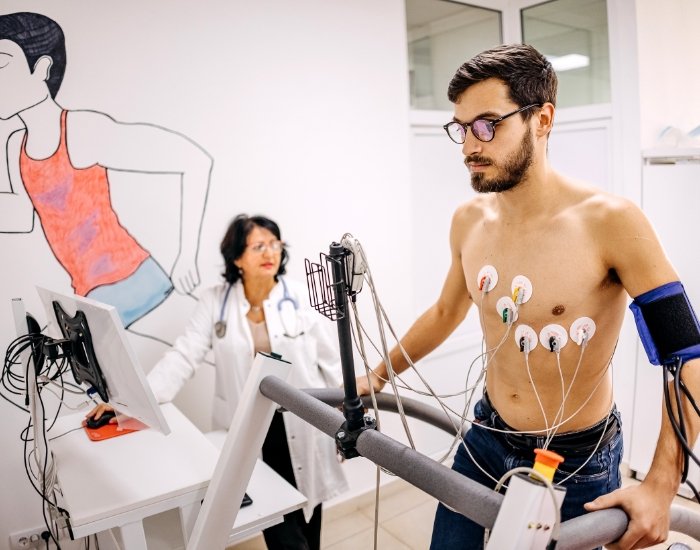
- Stress test: checks for reduced blood flow during exercise. See exercise stress testing.
- Blood tests: thyroid, electrolytes, blood count and, when needed, troponin.
If the heart checks out, your doctor can turn to reflux treatment, anxiety care or a lung evaluation with confidence that nothing serious has been missed.
Where to See a Cardiologist in Houston
Epic Heart & Vascular Center evaluates heart and vascular symptoms at three Greater Houston offices, with many tests such as ECGs and echocardiograms available on site. Care is led by Dr. M. Usman Khan, MD, FACC.
Also serving Richmond, Spring, Kingwood, Willowbrook and Eldridge patients. Monday to Friday, 8:00 am to 5:00 pm.
Key Takeaways
- A strange chest feeling without pain is common and often harmless, but not always.
- Extra beats, AFib and reduced blood flow to the heart can all cause sensations without pain.
- Reflux, anxiety, muscle strain and stimulants are frequent non-heart causes.
- Feelings with exertion, breathlessness, fainting or an irregular pulse need prompt evaluation.
- An ECG and a wearable monitor are the usual first tests.
Frequently Asked Questions
Can you have a heart problem without chest pain?
Yes. Rhythm problems often cause fluttering or skipped beats without pain, and some people with narrowed heart arteries feel only pressure, breathlessness or fatigue.
Why does my chest feel weird but not hurt?
Common reasons include extra heartbeats, acid reflux, muscle tension and anxiety. If it keeps happening or appears with activity, see a doctor for an ECG.
Can anxiety cause a weird feeling in the chest?
Yes. Anxiety and panic can cause tightness, fluttering and a racing heart. Because heart problems can feel similar, new or changing symptoms should be checked first.
Is a fluttering feeling in the chest dangerous?
Brief flutters are usually harmless extra beats. Fluttering that lasts, comes with dizziness or breathlessness, or is fast and irregular could be atrial fibrillation and should be evaluated.
What test will show what is happening?
An ECG is first. If symptoms come and go, a Holter or event monitor worn for days or weeks is the best way to capture them.
When should I call 911?
Call 911 for chest pressure with sweating, nausea or shortness of breath, discomfort spreading to the arm, jaw or back, fainting, or a racing heartbeat that does not settle.
Sources and Further Reading
- American Heart Association. Warning Signs of a Heart Attack.
- American Heart Association. Symptoms, Diagnosis and Monitoring of Arrhythmia.
- National Heart, Lung, and Blood Institute. Arrhythmias: Symptoms.
- MedlinePlus. Heart palpitations.
- MedlinePlus. GERD.
Medical disclaimer: This article is for general education and does not replace a visit with your own doctor. Symptoms, test results and treatment choices differ from person to person.
Please note: Reading this article does not create a doctor–patient relationship. If you think you are having a medical emergency, call 911.

About our cardiology practice
Dr. M. Usman Khan, MD, FACC
Dr. Khan is an interventional and general cardiologist who leads care at Epic Heart & Vascular Center, with offices in Northwest Houston, Tomball and Sugar Land. He completed his cardiovascular fellowship at the University of Virginia and holds fellowships in the American College of Cardiology, the American College of Physicians, the Society for Cardiovascular Angiography and Interventions and the American Society of Nuclear Cardiology.
This guide was written by the Epic Heart & Vascular Center editorial team from the sources listed above. Meet Dr. Khan →
Related Articles
Heart Palpitations: Causes, When Your Heart Skips a Beat, and Treatment
Palpitations, the feeling that your heart is racing, pounding or skipping, are common and usually harmless. Learn the causes, warning signs of…
Premature Atrial Contractions (PACs): Causes, Symptoms and When to Worry
Premature atrial contractions are extra heartbeats from the upper chambers that feel like a skip or flutter. Learn what causes PACs, when…
Heart Palpitations at Night: When to Worry and What You Should Know
Palpitations at night are common and often harmless, but some patterns point to atrial fibrillation, sleep apnea or other conditions. Learn the…