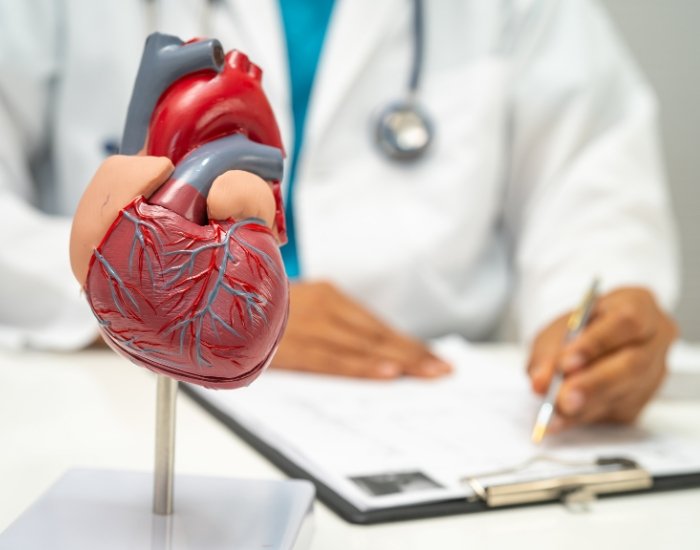
Hypertension, or high blood pressure, means the force of blood against your artery walls is consistently too high. It is extremely common, affecting nearly half of U.S. adults, and it is the leading modifiable risk factor for heart attack, stroke, heart failure and kidney disease.
Its danger lies in its silence. Most people feel completely normal while hypertension slowly damages blood vessels and organs over years. This guide explains how blood pressure is measured and classified, how hypertension affects each organ, what causes it and how it is treated.
Quick answer
Hypertension is blood pressure that stays at or above 130/80 mmHg under the 2025 AHA/ACC guideline. Over time it thickens and stiffens the heart, narrows and damages arteries, and harms the brain (stroke, dementia), kidneys (chronic kidney disease), eyes (retinopathy) and blood vessels (aneurysm, peripheral artery disease). Most hypertension has no single cause, but some cases come from sleep apnea, kidney disease, hormone problems or medicines. Lifestyle changes and medicines reduce the risk of organ damage substantially.
Have symptoms you want checked? Dr. M. Usman Khan sees patients at our Northwest Houston, Tomball and Sugar Land offices.
What patients say about our care team
Read all reviews on Google- ★★★★★
The staff was amazing, very friendly and attentive.
— Stephanie G. Google review - ★★★★★
He explained everything to me!
— Yesenia B. Google review - ★★★★★
Everyone is incredibly supportive and the standard of care is top tier.
— Humzah A. Google review - ★★★★★
It's always good when someone cares, not just comes to work.
— Cecila A. Google review - ★★★★★
I felt like I waited less time and was seen much faster!
— Yesenia B. Google review
- ★★★★★
I am extremely grateful for the support and compassion.
— Debra L. W. Google review - ★★★★★
She always takes great care of me.
— Shemeanna B. Google review - ★★★★★
Her clinical skills were exemplary. I would definitely recommend.
— Humzah A. Google review - ★★★★★
I had a great experience with my appointment today.
— Stephanie G. Google review - ★★★★★
Mrs. Maxine literally listened to my concerns.
— Cecila A. Google review
Important
A reading above 180/120 with chest pain, shortness of breath, severe headache, confusion, vision changes or weakness is a hypertensive emergency. Call 911.
How Is Hypertension Defined?
Blood pressure is classified as normal (below 120/80), elevated (120–129/below 80), stage 1 hypertension (130–139 or 80–89) and stage 2 hypertension (140/90 or higher).
| Category | Systolic | Diastolic |
|---|---|---|
| Normal | Below 120 | and below 80 |
| Elevated | 120–129 | and below 80 |
| Stage 1 hypertension | 130–139 | or 80–89 |
| Stage 2 hypertension | 140 or higher | or 90 or higher |
| Severe | Above 180 | and/or above 120 |
Diagnosis should be based on multiple readings, ideally including home or ambulatory monitoring. See diastolic blood pressure and hypertension and high blood pressure.
How Does Hypertension Affect the Heart?
It forces the heart to work harder, thickening the left ventricle (LVH), stiffening it, and raising the risk of heart failure, atrial fibrillation, coronary artery disease and heart attack.
Over years, the thickened muscle becomes less flexible, leading to diastolic dysfunction and heart failure with preserved ejection fraction. High pressure also accelerates plaque in the coronary arteries and enlarges the upper chambers, setting the stage for atrial fibrillation. See long-term effects on the heart.
When to seek care right away
Call 911 for:
- Blood pressure above 180/120 with chest pain or breathlessness
- Severe headache, confusion or vision changes
- Weakness, numbness or speech trouble
- Fainting
Call your doctor the same day for:
- Readings consistently above 130/80
- Blood pressure above goal on medicines
- Morning headaches with snoring
- Swelling or reduced urine output
How Does Hypertension Affect the Brain?
High blood pressure is the leading risk factor for stroke, both from blocked and ruptured vessels, and contributes to vascular dementia and cognitive decline.
Damage to small brain arteries causes silent strokes and white matter changes visible on MRI. Lowering blood pressure reduces the risk of stroke and, in research, of mild cognitive impairment.
How Does Hypertension Affect the Kidneys?
It damages the small filtering vessels of the kidneys, leading to protein in the urine and chronic kidney disease, which in turn raises blood pressure further.
Hypertension and diabetes are the two leading causes of kidney failure in the United States. Regular urine and blood tests detect early kidney damage, and certain medicines such as ACE inhibitors, ARBs and SGLT2 inhibitors protect the kidneys. See renal artery ultrasound.
How Does Hypertension Affect the Eyes and Blood Vessels?
It narrows and damages retinal blood vessels (hypertensive retinopathy) and accelerates atherosclerosis and aneurysms throughout the body.
- Eyes: retinopathy, retinal vein occlusion and, in severe cases, vision loss. See eye symptoms and vascular disease.
- Aorta: raises the risk of aortic aneurysm and dissection.
- Leg arteries: contributes to peripheral artery disease.
- Sexual function: can contribute to erectile dysfunction.
What Causes Hypertension?
Most hypertension is primary, developing from a mix of genetics, age, excess weight, high sodium intake, inactivity, alcohol and stress; secondary hypertension has a specific cause such as sleep apnea, kidney disease, hormone disorders or medicines.
- Obstructive sleep apnea
- Chronic kidney disease or narrowing of the kidney arteries
- Primary aldosteronism and other adrenal or thyroid disorders
- Medicines: NSAIDs, decongestants, some antidepressants, steroids, stimulants, estrogen
- Alcohol excess and stimulant drugs
Secondary causes are suspected in younger patients, sudden onset, very high or resistant blood pressure, or low potassium.
How Is Hypertension Treated?
Treatment combines lifestyle changes (sodium reduction, DASH diet, exercise, weight loss, less alcohol, better sleep) with medicines such as ACE inhibitors, ARBs, calcium channel blockers and thiazide-type diuretics, aiming for below 130/80 for most adults.
Many people need two or more medicines, often combined in one pill. Home monitoring helps fine-tune treatment. See 6 easy ways to lower blood pressure and high blood pressure treatment.
Who Is Most Likely to Develop Hypertension?
Risk rises with age, family history, excess weight, high sodium and low potassium intake, inactivity, alcohol, diabetes, kidney disease and sleep apnea, and hypertension is especially common and often more severe among Black adults.
About half of U.S. adults have hypertension under current definitions, and many do not know it. Blood pressure tends to rise with age as arteries stiffen. Hypertension often begins earlier and is more severe among Black Americans, contributing to higher rates of stroke, heart failure and kidney disease, which makes early detection and treatment especially important.
- Age: systolic pressure rises steadily after midlife.
- Family history: genes influence how the body handles salt and blood vessel tone.
- Weight: excess weight is one of the strongest drivers.
- Diet: high sodium, low potassium and heavy processed food intake.
- Alcohol and inactivity.
- Pregnancy-related conditions: preeclampsia and gestational hypertension raise long-term risk.
- Chronic stress and poor sleep.
Children and young adults
Hypertension is increasingly seen in teenagers and young adults, often linked to obesity. Young adults with high readings should be evaluated for secondary causes and given early lifestyle guidance, since organ damage accumulates over decades.
How Should You Monitor Your Blood Pressure?
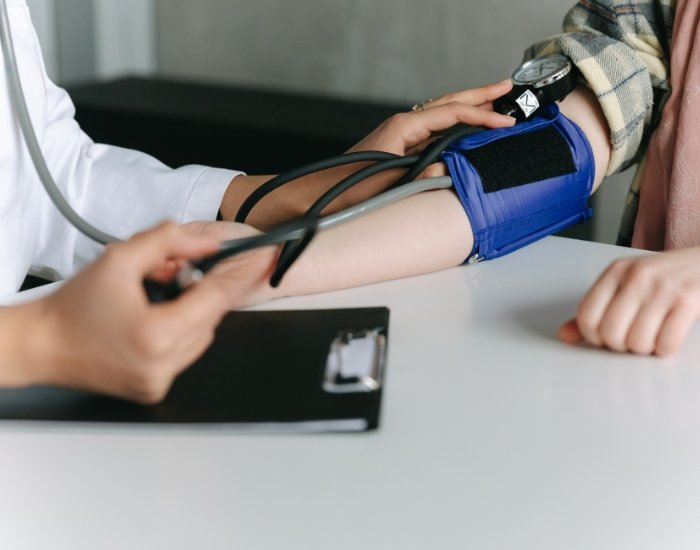
Use a validated upper-arm home monitor, measure twice in the morning and evening for a week before appointments, and record the averages; 24-hour ambulatory monitoring confirms the diagnosis in uncertain cases.
- Sit quietly for five minutes with your back supported and feet flat.
- Rest your arm at heart level on a table.
- Avoid caffeine, exercise and smoking for 30 minutes beforehand.
- Take two readings one minute apart and record both.
- Bring your device to a visit once a year to check its accuracy against the office monitor.
Home readings detect white coat hypertension (high only in the office) and masked hypertension (normal in the office but high at home), both of which change treatment decisions. Many patients find that seeing their own numbers improve is a strong motivator to keep up healthy habits and take medicines consistently.
Why Does Controlling Hypertension Matter So Much?
Lowering blood pressure to goal cuts the risk of stroke, heart attack, heart failure and kidney failure, and the benefit starts within months of better control.
Large clinical trials show that each 10 mmHg reduction in systolic pressure lowers the risk of major cardiovascular events by roughly 20%, stroke by about a quarter and heart failure by more than a quarter. Lower targets, such as below 130/80, provide extra protection for most adults, especially those with diabetes, kidney disease or prior heart disease. Because organ damage builds silently, the most important step is simply knowing your numbers and acting on them with your care team.
Where to See a Cardiologist in Houston
Epic Heart & Vascular Center evaluates heart and vascular symptoms at three Greater Houston offices, with many tests such as ECGs and echocardiograms available on site. Care is led by Dr. M. Usman Khan, MD, FACC.
Also serving Richmond, Spring, Kingwood, Willowbrook and Eldridge patients. Monday to Friday, 8:00 am to 5:00 pm.
Key Takeaways
- Hypertension is blood pressure at or above 130/80 under the 2025 guideline.
- It usually causes no symptoms while damaging the heart, brain, kidneys, eyes and blood vessels.
- It is the leading modifiable risk factor for stroke and a major cause of heart failure and kidney disease.
- Some cases have secondary causes such as sleep apnea or hormone disorders.
- Lifestyle changes and medicines reduce organ damage substantially.
Frequently Asked Questions
What is hypertension?
Blood pressure that stays at or above 130/80 mmHg, putting extra strain on the heart and blood vessels.
What organs does high blood pressure damage?
The heart, brain, kidneys, eyes and blood vessels throughout the body.
Does hypertension cause symptoms?
Usually not, which is why regular checks matter. Very high readings can cause headache, chest pain or vision changes.
Can hypertension be cured?
Primary hypertension is usually controlled rather than cured. Secondary causes, such as sleep apnea or a hormone problem, may be correctable.
What is a normal blood pressure?
Below 120/80 mmHg.
How is hypertension diagnosed?
With multiple readings, ideally including home or 24-hour ambulatory monitoring.
Sources and Further Reading
- National Heart, Lung, and Blood Institute. High Blood Pressure.
- Centers for Disease Control and Prevention. High Blood Pressure.
- Jones DW, et al. 2025 AHA/ACC/Multisociety High Blood Pressure Guideline. PubMed.
- NIDDK. High Blood Pressure and Kidney Disease.
Medical disclaimer: This article is for general education and does not replace a visit with your own doctor. Symptoms, test results and treatment choices differ from person to person.
Please note: Reading this article does not create a doctor–patient relationship. If you think you are having a medical emergency, call 911.

About our cardiology practice
Dr. M. Usman Khan, MD, FACC
Dr. Khan is an interventional and general cardiologist who leads care at Epic Heart & Vascular Center, with offices in Northwest Houston, Tomball and Sugar Land. He completed his cardiovascular fellowship at the University of Virginia and holds fellowships in the American College of Cardiology, the American College of Physicians, the Society for Cardiovascular Angiography and Interventions and the American Society of Nuclear Cardiology.
This guide was written by the Epic Heart & Vascular Center editorial team from the sources listed above. Meet Dr. Khan →
Related Articles
Hypertension (High Blood Pressure): Stages, Diagnosis and Treatment
A clear guide to hypertension: what the numbers mean, the stages, how it is diagnosed accurately, symptoms of a crisis, treatment goals…
How Does High Blood Pressure Affect Heart Health Long Term?
Years of high blood pressure thicken and stiffen the heart, narrow the coronary arteries and set the stage for heart failure, atrial…
High Blood Pressure Risk Factors: Here’s What You Can Change
Some high blood pressure risk factors, like age and genes, are fixed. Many others, including salt, weight, activity, alcohol, sleep and stress,…