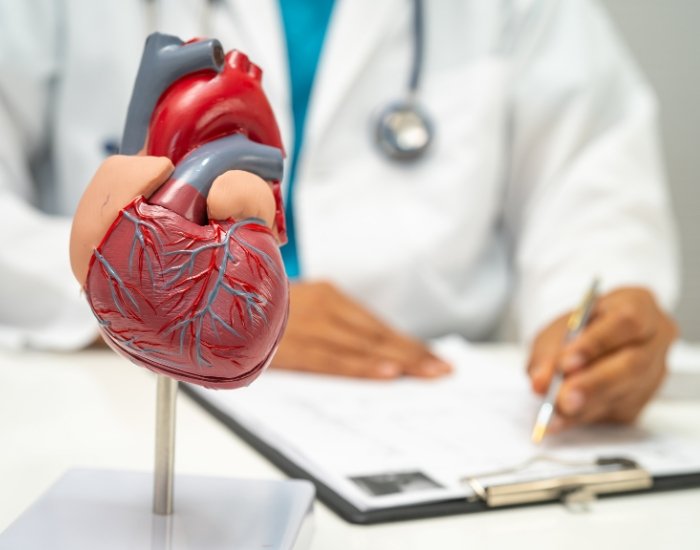
An irregular heartbeat, or arrhythmia, simply means the heart is beating too fast, too slow or with an uneven pattern. That description covers a wide range of conditions, from extra beats nearly everyone has at times to rhythms that can cause stroke or sudden death.
Understanding which type you have is the key to knowing whether it is a cause for concern. This guide walks through the main types of arrhythmia, how they feel, how serious they usually are and how they are treated.
Quick answer
Whether an irregular heartbeat is a cause for concern depends on its type. Premature atrial and ventricular contractions (PACs and PVCs) are usually harmless in a healthy heart. Atrial fibrillation and atrial flutter raise stroke risk and need treatment. Supraventricular tachycardia (SVT) is usually not dangerous but often curable. Ventricular tachycardia and fibrillation are life-threatening. Slow rhythms such as sinus node disease and heart block can cause fainting and may need a pacemaker. An ECG or heart monitor identifies the type.
Have symptoms you want checked? Dr. M. Usman Khan sees patients at our Northwest Houston, Tomball and Sugar Land offices.
What patients say about our care team
Read all reviews on Google- ★★★★★
The staff was amazing, very friendly and attentive.
— Stephanie G. Google review - ★★★★★
He explained everything to me!
— Yesenia B. Google review - ★★★★★
Everyone is incredibly supportive and the standard of care is top tier.
— Humzah A. Google review - ★★★★★
It's always good when someone cares, not just comes to work.
— Cecila A. Google review - ★★★★★
I felt like I waited less time and was seen much faster!
— Yesenia B. Google review
- ★★★★★
I am extremely grateful for the support and compassion.
— Debra L. W. Google review - ★★★★★
She always takes great care of me.
— Shemeanna B. Google review - ★★★★★
Her clinical skills were exemplary. I would definitely recommend.
— Humzah A. Google review - ★★★★★
I had a great experience with my appointment today.
— Stephanie G. Google review - ★★★★★
Mrs. Maxine literally listened to my concerns.
— Cecila A. Google review
Important
Irregular heartbeat with fainting, chest pain, severe breathlessness or stroke symptoms needs 911.
What Are the Main Types of Arrhythmia?
Extra beats, atrial fibrillation and flutter, supraventricular tachycardia, ventricular arrhythmias, and slow rhythms (bradycardia and heart block).
| Type | How it feels | Usual seriousness |
|---|---|---|
| PACs / PVCs | Skipped beat, thump | Usually benign |
| Atrial fibrillation | Irregular, often fast fluttering | Serious: stroke risk |
| Atrial flutter | Fast, often regular palpitations | Serious: stroke risk |
| SVT | Sudden fast regular racing | Usually not dangerous |
| Ventricular tachycardia | Fast racing, dizziness, fainting | Potentially life-threatening |
| Ventricular fibrillation | Collapse | Cardiac arrest |
| Bradycardia / heart block | Fatigue, dizziness, fainting | Varies; may need pacemaker |
Are Extra Beats (PACs and PVCs) Dangerous?
In a structurally normal heart they are usually harmless; very frequent PVCs or PVCs in people with heart disease need evaluation.
Triggers include caffeine, alcohol, stress, poor sleep and low potassium or magnesium. See when to worry about an irregular heartbeat.
Why Do AFib and Atrial Flutter Matter?
Both make the upper chambers beat chaotically or too fast, which allows clots to form and raises stroke risk; they can also weaken the heart if the rate stays high.
Treatment includes blood thinners based on stroke risk, rate or rhythm control, and catheter ablation, which cures most atrial flutter. See AFib diagnosis and treatment.
What Is SVT?
Supraventricular tachycardia is a sudden, fast, regular rhythm starting above the ventricles, often from an extra electrical pathway; episodes start and stop abruptly.
Vagal maneuvers or medicines can stop episodes, and catheter ablation cures most cases. See why your heart beats fast suddenly.
Which Rhythms Are Life-Threatening?
Sustained ventricular tachycardia and ventricular fibrillation, usually in people with prior heart attack, cardiomyopathy or inherited conditions, can cause cardiac arrest.
Treatment includes medicines, ablation and implantable defibrillators. See defibrillators vs pacemakers.
When to seek care right away
Call 911 for:
- Fainting
- Chest pain
- Severe breathlessness
- Stroke symptoms
Call your doctor the same day for:
- Fast, irregular rhythm
- Episodes starting and stopping suddenly
- Frequent daily skipped beats
- Fatigue or dizziness with a slow pulse
What About Slow Heart Rhythms?
Sick sinus syndrome and heart block slow the heart, causing fatigue, dizziness, breathlessness and fainting; medicines such as beta-blockers can also slow the rate.
A pacemaker treats symptomatic slow rhythms. Well-trained athletes may have a normally slow resting rate without symptoms.
How Is the Type Identified?
A 12-lead ECG during symptoms, Holter or patch monitor, event monitor, implantable loop recorder, echocardiogram and sometimes an electrophysiology study.
See Holter monitor, event monitor and ECG.
What Inherited Rhythm Disorders Should Families Know About?
Long QT syndrome, Brugada syndrome, catecholaminergic polymorphic ventricular tachycardia, arrhythmogenic cardiomyopathy and hypertrophic cardiomyopathy can cause dangerous rhythms in young, otherwise healthy people.
Warning signs include fainting during exercise or emotion, seizures without a clear cause, and a family history of unexplained sudden death, drowning or car accidents under age 50. First-degree relatives of affected people should be screened with an ECG and echocardiogram, and genetic testing may help.
Medicines that can affect rhythm
Some antibiotics, antidepressants, antipsychotics, antinausea medicines and stimulants can lengthen the QT interval or trigger arrhythmias. Tell your doctor and pharmacist about all medicines and supplements, especially if you have a known rhythm problem.
What Causes Arrhythmias?
Coronary artery disease and prior heart attack, high blood pressure, heart failure, valve disease, congenital and inherited conditions, thyroid disease, sleep apnea, electrolyte imbalances, alcohol, stimulants and aging of the electrical system.
| Cause | Arrhythmias it commonly triggers |
|---|---|
| High blood pressure | AFib |
| Prior heart attack (scar) | Ventricular tachycardia |
| Sleep apnea | AFib, slow rhythms at night |
| Overactive thyroid | AFib, fast heart rate |
| Alcohol binge | AFib (“holiday heart”) |
| Low potassium or magnesium | Extra beats, ventricular arrhythmias |
| Aging conduction system | Heart block, sick sinus syndrome |
Treating these underlying causes is often as important as treating the rhythm itself.
Ablation explained
Catheter ablation uses thin catheters passed through veins to the heart to map the electrical system and destroy or isolate the small areas that start abnormal rhythms. It is the first-choice treatment for many patients with SVT and atrial flutter and an increasingly common option for AFib and some ventricular arrhythmias.
Do Children and Teens Get Arrhythmias?
Yes. SVT is the most common arrhythmia in children, and inherited conditions may first show up in the teen years, so fainting with exercise in young people needs evaluation.
How Can You Live Well With an Arrhythmia?
Know your rhythm type and action plan, take medicines as prescribed, limit triggers, treat sleep apnea and high blood pressure, stay active within your doctor’s guidance, and keep follow-up appointments.
- Learn to check your pulse and use a home ECG device if advised.
- Limit alcohol and avoid energy drinks and stimulant decongestants.
- Keep a symptom log with dates, duration and triggers.
- Know when to call 911: fainting, chest pain, severe breathlessness.
- Tell all clinicians about your arrhythmia and medicines.
Exercise and arrhythmias
Regular moderate exercise benefits most people with arrhythmias and can reduce AFib burden. Extremely intense endurance training over many years may increase AFib risk in some athletes. People with inherited conditions or ventricular arrhythmias need individualized guidance on sports participation.
Which Medicines Treat Arrhythmias?
Beta-blockers and calcium channel blockers control heart rate; antiarrhythmics such as flecainide, sotalol, dofetilide and amiodarone help maintain normal rhythm; anticoagulants prevent stroke in AFib and flutter.
Antiarrhythmics need careful monitoring, sometimes starting in the hospital, because some can themselves provoke arrhythmias or affect the thyroid, liver or lungs. Your cardiologist will balance benefits and side effects and may suggest ablation instead of long-term medicines.
Are Arrhythmias Common in Pregnancy?
Extra beats and SVT episodes can increase during pregnancy because of higher blood volume and heart rate; most are manageable with medicines that are safe in pregnancy.
Can Smartwatches Detect Arrhythmias?
Many smartwatches can detect possible AFib and record a single-lead ECG, which helps catch episodes, but they cannot reliably identify every arrhythmia and readings should be reviewed by a clinician.
Bring saved recordings to your appointment.
What Is an Electrophysiologist?
A cardiologist with specialized training in heart rhythm disorders who performs ablations, device implants and electrophysiology studies.
How Is Atrial Flutter Different From Atrial Fibrillation?
Atrial flutter is an organized circuit producing a fast, often regular rhythm, while AFib is chaotic and irregular; both raise stroke risk, but flutter is more often cured with ablation.
What Is the Outlook With an Arrhythmia?
Most arrhythmias are very treatable, and many people live normal lives with the right diagnosis, treatment and follow-up.
What Is a Normal Heart Rate?
For most adults, a resting heart rate between 60 and 100 beats per minute is normal; fit people may be lower without symptoms.
Where to See a Cardiologist in Houston
Epic Heart & Vascular Center evaluates heart and vascular symptoms at three Greater Houston offices, with many tests such as ECGs and echocardiograms available on site. Care is led by Dr. M. Usman Khan, MD, FACC.
Also serving Richmond, Spring, Kingwood, Willowbrook and Eldridge patients. Monday to Friday, 8:00 am to 5:00 pm.
Key Takeaways
- Arrhythmias range from harmless to life-threatening.
- PACs and PVCs are usually benign in a healthy heart.
- AFib and atrial flutter raise stroke risk.
- SVT is usually curable with ablation.
- Ventricular rhythms and heart block need prompt treatment.
Frequently Asked Questions
Is an irregular heartbeat serious?
It depends on the type; many are harmless, but AFib and ventricular rhythms are serious.
What is the most common arrhythmia?
Extra beats are most common; AFib is the most common sustained arrhythmia.
Can arrhythmias be cured?
Many, including SVT and atrial flutter, can be cured with ablation.
What does SVT feel like?
A sudden, fast, regular racing heartbeat that stops abruptly.
Do PVCs damage the heart?
Usually not, unless they are very frequent.
What test diagnoses arrhythmias?
An ECG or wearable heart monitor during symptoms.
Sources and Further Reading
- National Heart, Lung, and Blood Institute. Arrhythmias.
- MedlinePlus. Arrhythmias.
- MedlinePlus. Paroxysmal supraventricular tachycardia (PSVT).
- MedlinePlus. Ventricular tachycardia.
Medical disclaimer: This article is for general education and does not replace a visit with your own doctor. Symptoms, test results and treatment choices differ from person to person.
Please note: Reading this article does not create a doctor–patient relationship. If you think you are having a medical emergency, call 911.

About our cardiology practice
Dr. M. Usman Khan, MD, FACC
Dr. Khan is an interventional and general cardiologist who leads care at Epic Heart & Vascular Center, with offices in Northwest Houston, Tomball and Sugar Land. He completed his cardiovascular fellowship at the University of Virginia and holds fellowships in the American College of Cardiology, the American College of Physicians, the Society for Cardiovascular Angiography and Interventions and the American Society of Nuclear Cardiology.
This guide was written by the Epic Heart & Vascular Center editorial team from the sources listed above. Meet Dr. Khan →
Related Articles
When Should You Be Worried About an Irregular Heartbeat?
Most skipped or extra beats are harmless, but some irregular heartbeats signal atrial fibrillation or dangerous rhythms. Learn the warning signs, who…
How Is Atrial Fibrillation Diagnosed and Treated?
Atrial fibrillation is diagnosed with an ECG or heart monitor and treated with a combination of stroke prevention, rate or rhythm control…

Why Does My Heart Beat Fast Suddenly? Causes of Sudden Rapid Heartbeat
A sudden fast heartbeat can come from adrenaline, caffeine, dehydration or anxiety, or from arrhythmias such as SVT, atrial fibrillation and ventricular…