
Artery & circulation care
Peripheral artery disease is narrowing of the arteries that carry blood to the legs and feet. We check leg circulation, explain test results such as the ankle-brachial index, and plan treatment that eases symptoms and lowers the risk of heart attack and stroke.
Overview
PAD develops when plaque narrows the arteries to the legs. The classic symptom is cramping, aching or tiredness in the calf, thigh or buttock while walking that eases within minutes of rest, called claudication. Only about 1 in 4 people with PAD have this classic pattern; others have different symptoms or none at all.
PAD matters beyond the legs. People with PAD have a higher risk of heart attack and stroke, so care focuses on the whole circulation.
Who may benefit
Leg pain has many causes, including nerve, joint and muscle problems. An evaluation helps tell them apart.
Your visit
Testing
| Test | What it shows |
|---|---|
| Ankle-brachial index (ABI) | A painless comparison of ankle and arm blood pressure. A resting ABI under 0.90 suggests PAD; your clinician interprets your result in context. |
| Exercise ABI | Repeats the ABI after walking when symptoms suggest PAD but the resting test is borderline. |
| Peripheral arterial ultrasound (Doppler) | Locates narrowed areas and measures blood flow speed in the leg arteries. |
| CT or MR angiography | Detailed images of the arteries, usually when a procedure is being planned. |
| Catheter angiography | Contrast X-ray inside the arteries, often done together with treatment. |
Treatment
A structured walking program, supervised or home-based, is one of the most effective ways to improve walking distance with claudication.
Stopping smoking, controlling blood pressure, cholesterol and blood sugar, and medicines to reduce clot risk lower the chance of heart attack and stroke. Medicine choices depend on your other conditions and bleeding risk.
Daily foot checks, good footwear and prompt care of any wound are especially important for people with diabetes.
When symptoms limit daily life despite other treatment, or when blood flow is threatened, a peripheral vascular intervention such as angioplasty or stenting may be discussed. Bypass surgery by a vascular surgeon is an option for some people. Procedures have benefits and risks, and they are not the first step for everyone.
Your cardiologist
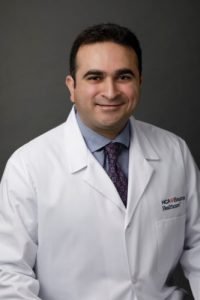
Dr. Khan evaluates leg circulation problems, interprets vascular testing, and performs peripheral angiography and angioplasty when they are appropriate.
Where care happens
Office visits take place at our three offices. ABI and vascular ultrasound may be done in the office or scheduled separately; angiography and interventions take place in a hospital or procedure setting. Our team will confirm the location.
17070 Red Oak Dr #405
Houston, TX 77090
155 School St Suite 220
Tomball, TX 77375
6534 Greatwood Parkway Unit A
Sugar Land, TX 77479
Also serves Richmond-area patients
Before you come
See new patient information and the insurance plans we work with. Coverage depends on your specific plan, so please confirm with your insurer.
Questions
No. Nerve compression in the spine, arthritis and muscle problems can cause similar pain. The pattern of symptoms, the exam and an ABI help tell them apart.
No. Many people improve with a walking program, quitting smoking and medicines. Procedures are considered when symptoms stay limiting or blood flow is threatened.
The same plaque process that narrows leg arteries often affects the heart and neck arteries too. Treating risk factors protects all of them.
Sources
Prepared by the Epic Heart & Vascular Center editorial team. Clinical review by a practice physician is pending for this version. Last updated November 2026.
Next step
Submitting the form sends a request. Our team will call you to confirm a time, the office and your insurance. For a suddenly cold, pale or painful leg, call 911.
Care is led by Dr. M. Usman Khan, MD, FACC, an interventional and general cardiologist. New patients can review patient information and the insurance plans we accept.
Heart & Vascular Care Close to Home
Book a visit with our board-certified cardiologist at any of our three offices. Our team will call you to confirm your time and insurance.
Houston (NW / Red Oak)
17070 Red Oak Dr #405, Houston, TX 77090
832-432-1951
Tomball
155 School St Ste 220, Tomball, TX 77375
832-304-2070
Sugar Land (Greatwood)
6534 Greatwood Pkwy Unit A, Sugar Land, TX 77479
832-645-8992
For a medical emergency, call 911.
Schedule an Appointment
Fill out the form and our team will contact you to confirm your visit.
Call the office nearest you
Houston NW / Red Oak · 832-432-195117070 Red Oak Dr #405, Houston, TX 77090 Tomball · 832-304-2070155 School St Ste 220, Tomball, TX 77375 Sugar Land / Greatwood · 832-645-89926534 Greatwood Pkwy Unit A, Sugar Land, TX 77479For a medical emergency, call 911.