Heart attacks can seem to strike out of nowhere, but many people, when asked afterward, recall warning signs in the days or weeks before. These early symptoms often come from a coronary artery that is narrowing or from a plaque that is becoming unstable.
Recognizing these signs and acting on them can prevent a heart attack or reduce its damage. This guide lists the 10 most important warning signs, explains why each matters, and tells you when to call 911 versus when to see a doctor quickly.
Quick answer
Top warning signs that can come before a heart attack include: chest pressure or tightness with exertion that eases with rest; chest discomfort that is new, more frequent or occurs at rest; unusual fatigue; shortness of breath with less activity than before; discomfort in the arm, jaw, neck, back or upper abdomen; cold sweats; nausea or indigestion-like discomfort; lightheadedness; sleep disturbance; and a sense that something is wrong. Any chest discomfort lasting more than a few minutes, at rest or with other symptoms needs 911. New exertional symptoms need a prompt doctor visit.
Have symptoms you want checked? Dr. M. Usman Khan sees patients at our Northwest Houston, Tomball and Sugar Land offices.
What patients say about our care team
Read all reviews on Google- ★★★★★
The staff was amazing, very friendly and attentive.
— Stephanie G. Google review - ★★★★★
He explained everything to me!
— Yesenia B. Google review - ★★★★★
Everyone is incredibly supportive and the standard of care is top tier.
— Humzah A. Google review - ★★★★★
It's always good when someone cares, not just comes to work.
— Cecila A. Google review - ★★★★★
I felt like I waited less time and was seen much faster!
— Yesenia B. Google review
- ★★★★★
I am extremely grateful for the support and compassion.
— Debra L. W. Google review - ★★★★★
She always takes great care of me.
— Shemeanna B. Google review - ★★★★★
Her clinical skills were exemplary. I would definitely recommend.
— Humzah A. Google review - ★★★★★
I had a great experience with my appointment today.
— Stephanie G. Google review - ★★★★★
Mrs. Maxine literally listened to my concerns.
— Cecila A. Google review
Important
Chest discomfort lasting more than a few minutes, at rest, or with sweating, breathlessness or nausea needs 911.
What Are the 10 Warning Signs?
Exertional chest pressure, unstable chest pain, unusual fatigue, breathlessness, arm, jaw, neck or back discomfort, cold sweats, nausea, lightheadedness, sleep disturbance and a sense of doom.
- 1. Chest pressure with exertion that eases with rest (angina).
- 2. Chest discomfort that is new, more frequent, longer or at rest (unstable angina).
- 3. Unusual fatigue for days or weeks, especially in women.
- 4. Shortness of breath with less activity than usual.
- 5. Arm, jaw, neck, shoulder or back discomfort with exertion.
- 6. Cold sweats without heat or exercise.
- 7. Nausea or indigestion-like discomfort, especially with exertion.
- 8. Lightheadedness or dizziness.
- 9. Sleep disturbance or waking breathless.
- 10. A sense that something is seriously wrong.
Why Is Changing Chest Pain So Important?
Chest discomfort that becomes more frequent, comes with less effort, lasts longer or occurs at rest suggests an unstable plaque and a high short-term risk of heart attack.
This pattern, unstable angina, needs emergency evaluation. See symptoms of blocked heart arteries.
Do Women Have Different Warning Signs?
Women more often report unusual fatigue, sleep disturbance, breathlessness, nausea and back or jaw discomfort before a heart attack, and less often classic chest pain.
See heart disease warning signs in women.
When Should You Call 911 vs See a Doctor?
Call 911 for chest discomfort at rest, lasting more than a few minutes, or with sweating, breathlessness, nausea or fainting; see a doctor within days for new exertional symptoms that fully resolve with rest.
| Situation | Action |
|---|---|
| Chest pressure at rest or lasting minutes | Call 911 |
| Chest pain with sweating, breathlessness or nausea | Call 911 |
| Chest pain worse or more frequent than usual | Call 911 or emergency care |
| New exertional chest, arm or jaw discomfort, gone with rest | See a doctor within days |
| Unusual fatigue or breathlessness for weeks | See a doctor soon |
When to seek care right away
Call 911 for:
- Chest discomfort at rest or lasting minutes
- Chest pain with sweating, nausea or breathlessness
- Fainting
- Chest pain worse than usual
Call your doctor the same day for:
- New exertional chest, arm or jaw discomfort
- Unusual fatigue for weeks
- Breathlessness with less activity
- Indigestion with exertion
Who Is Most at Risk?
People with high blood pressure, high cholesterol, diabetes, smoking history, obesity, kidney disease, family history of early heart disease, or prior heart disease.
See lifestyle changes for heart disease.
What Tests Check for an Impending Heart Attack?
ECG and troponin in the emergency setting; stress testing, coronary CT angiography or catheterization for exertional symptoms.
See stress echocardiography and nuclear cardiac testing.
How Can You Prevent a Heart Attack After Warning Signs?
Get evaluated promptly, take prescribed medicines such as aspirin and statins, control blood pressure, cholesterol and diabetes, quit smoking and follow your cardiologist’s plan, including stents when needed.
See heart attack vs heartburn.
What Should You Do Today if You Have Warning Signs?
Stop strenuous activity, write down your symptoms and when they occur, call your doctor or cardiologist for a prompt appointment, and know the 911 criteria if symptoms change.
- Do not push through exertional chest discomfort.
- Make sure you have a working phone and know your address for emergency calls.
- Ask your doctor whether you should take aspirin and carry nitroglycerin.
- Tell family members what symptoms to watch for.
- Bring your medicine list and symptom notes to the visit.
Heart attack symptoms in people with diabetes
Diabetes can damage the nerves that carry pain signals, so heart attack warning signs may be mild or absent. Breathlessness, fatigue, nausea, sweating or an unexplained rise in blood sugar can be the only clues. People with diabetes should have a lower threshold for getting checked.
What Can Trigger a Heart Attack in Someone at Risk?
Heavy exertion, extreme cold, intense emotional stress, heavy meals, heavy alcohol use, cocaine or stimulant use, severe infections such as flu, and early morning hours can trigger a heart attack in people with vulnerable plaque.
Flu and COVID-19 vaccination reduce infection-related cardiac risk. Shoveling snow, sudden intense exercise after inactivity and anger outbursts are well-known triggers. People with known heart disease should warm up, avoid extreme exertion in cold weather and build activity gradually.
What a heart attack itself feels like
During a heart attack, symptoms usually last more than a few minutes or come and go: chest pressure or pain, spreading discomfort, breathlessness, cold sweat, nausea and lightheadedness. See heart attack vs cardiac arrest.
Why Do People Ignore Warning Signs?
Many people attribute symptoms to aging, stress, indigestion or being out of shape, or worry about overreacting; treating new symptoms seriously saves heart muscle and lives.
What Is a Silent Heart Attack?
A heart attack with mild or unrecognized symptoms, often mistaken for indigestion, fatigue or the flu, and later discovered on an ECG or imaging; it carries similar long-term risk to a recognized heart attack.
If an ECG shows signs of a prior heart attack you did not know about, your cardiologist will evaluate your arteries and start preventive treatment.
What Happens if Tests Show a Blockage?
Depending on severity, treatment includes medicines, lifestyle changes, cardiac rehab, and stents or bypass surgery to restore blood flow before a heart attack occurs.
Can Younger Adults Have Warning Signs?
Yes. Smoking, very high cholesterol, diabetes, stimulant use and family history can cause heart attacks before age 50, and warning signs should not be dismissed because of age.
Should You Take Aspirin Every Day to Prevent a Heart Attack?
Only if your doctor recommends it; daily aspirin helps people with known heart disease but is not advised for most people without it because of bleeding risk.
Why Does Family History Matter?
A parent or sibling with heart disease before 55 (men) or 65 (women) raises your risk and is a reason for earlier screening.
Why Are Heart Attacks More Common in Cold Weather and Mornings?
Cold narrows blood vessels and raises blood pressure, and morning hormone surges increase heart rate and clotting tendency.
Where to See a Cardiologist in Houston
Epic Heart & Vascular Center evaluates heart and vascular symptoms at three Greater Houston offices, with many tests such as ECGs and echocardiograms available on site. Care is led by Dr. M. Usman Khan, MD, FACC.
Also serving Richmond, Spring, Kingwood, Willowbrook and Eldridge patients. Monday to Friday, 8:00 am to 5:00 pm.
Key Takeaways
- Many heart attacks have warning signs days or weeks earlier.
- Exertional chest pressure and changing chest pain are key signs.
- Fatigue, breathlessness and jaw or arm discomfort can also warn.
- Women often have subtler warning signs.
- Call 911 for chest discomfort at rest or lasting minutes.
Frequently Asked Questions
What are the warning signs a month before a heart attack?
Unusual fatigue, breathlessness, chest discomfort with exertion and sleep problems are commonly reported.
Can you feel a heart attack coming days before?
Many people have warning signs such as exertional chest pressure in the preceding days or weeks.
What does unstable angina feel like?
Chest discomfort that is new, more frequent, longer or occurs at rest.
Are warning signs different in women?
Women more often have fatigue, breathlessness, nausea and back or jaw pain.
Should I go to the ER for chest pain that went away?
If it was severe, prolonged or at rest, yes; otherwise see a doctor promptly.
Can a heart attack happen without warning?
Yes. Some heart attacks occur without prior symptoms.
Sources and Further Reading
- National Heart, Lung, and Blood Institute. Heart Attack.
- Centers for Disease Control and Prevention. About Heart Attack Symptoms, Risk, and Recovery.
- MedlinePlus. Angina.
Medical disclaimer: This article is for general education and does not replace a visit with your own doctor. Symptoms, test results and treatment choices differ from person to person.
Please note: Reading this article does not create a doctor–patient relationship. If you think you are having a medical emergency, call 911.

About our cardiology practice
Dr. M. Usman Khan, MD, FACC
Dr. Khan is an interventional and general cardiologist who leads care at Epic Heart & Vascular Center, with offices in Northwest Houston, Tomball and Sugar Land. He completed his cardiovascular fellowship at the University of Virginia and holds fellowships in the American College of Cardiology, the American College of Physicians, the Society for Cardiovascular Angiography and Interventions and the American Society of Nuclear Cardiology.
This guide was written by the Epic Heart & Vascular Center editorial team from the sources listed above. Meet Dr. Khan →
Related Articles

What Is the Difference Between a Heart Attack and Cardiac Arrest?
A heart attack is a circulation problem; cardiac arrest is an electrical problem. Learn how the symptoms differ, what to do in…
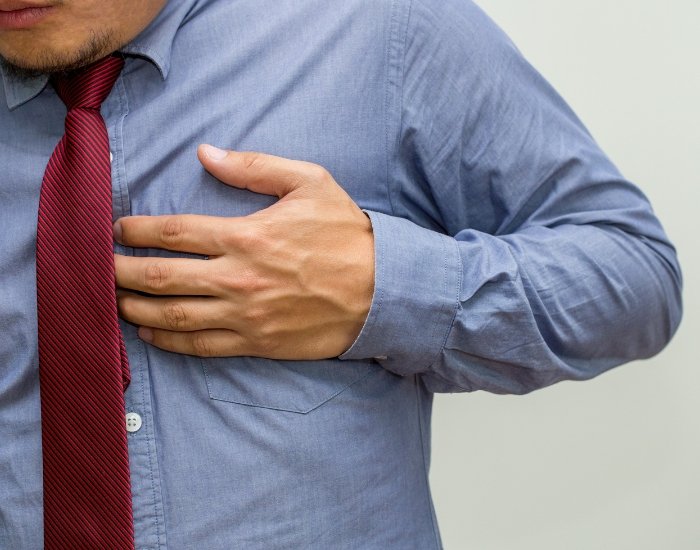
What Are the Symptoms of Blocked Arteries in the Heart?
Blocked coronary arteries can cause chest pressure with exertion, breathlessness, unusual fatigue and pain in the arm, jaw or back, or no…

What Are the Early Warning Signs of Heart Disease in Women?
Heart disease is the leading cause of death in women, yet its early signs are often subtle: fatigue, breathlessness, sleep problems, nausea…